
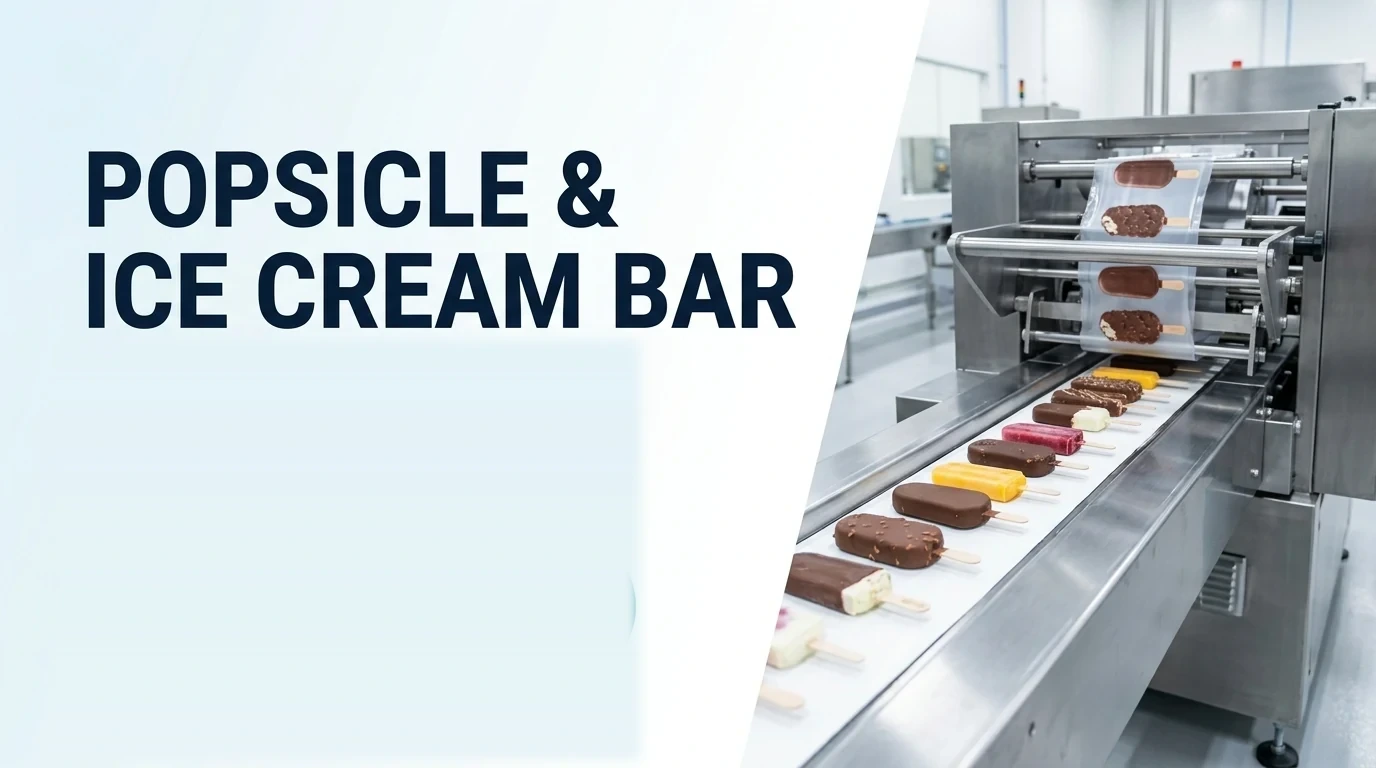
Which Ice Cream Bar or Popsicle Packaging Process Do You Need?
We engineer and build horizontal flow wrapping equipment around your frozen novelty format and production line through LINEVO (backed by the Dession manufacturing group; WhatsApp +86 15338888949). In our confectionery and frozen novelty portfolio, our horizontal flow wrappers seal solid frozen bars, moulded popsicles on sticks, ice cream sandwiches, and prepared multipacks in reel-fed film packs, whereas twist wrapping, powder or liquid stick packs, and loose confectionery dosed into pouches require separate packaging machinery routes. Compare solid confectionery formats on our candy packaging machine page and review pillow-pack geometry in our flow wrap packaging overview.
Many buyers searching for a popsicle packaging machine need to distinguish solid frozen novelties from unfrozen liquid ice-pop tubes before requesting a quote. While solid moulded popsicles and chocolate-enrobed ice cream bars run on horizontal flow wrappers (HFFS), unfrozen freeze-at-home liquid tubes require a vertical liquid form-fill-seal (VFFS) or multi-lane liquid sachet machine equipped with a volumetric piston pump—such as a pneumatic 304 stainless-steel vertical liquid bagger dosing 30–500 ml pouches (OPP/CPP, OPP/CE, or PET/PE heat-sealable laminates, 50–120 microns) at 30–50 bags/min across bag lengths of 30–230 mm and widths of 50–150 mm (max 320 mm film width, 300 mm reel OD, 220 V 60 Hz 2 kVA, 300 kg).
| Product format | Primary process route | Key engineering boundary |
|---|---|---|
| Solid moulded ice cream bar or stick popsicle | Horizontal flow wrapper (HFFS) with fin seal and crimped ends | Size former and pitch for full bar + stick projection; cold-seal or chilled-plate heat seal |
| Pre-assembled ice cream sandwich or wafer bar | Horizontal flow wrapper or integrated sandwich filling & wrapping line | Support soft ice-cream core between wafers (up to 4,000 pcs/hr per freezer-filler lane) |
| Unfrozen liquid ice-pop or freeze-at-home tube | Vertical liquid form-fill-seal (VFFS) or multi-lane liquid sachet filler | Requires piston pump dosing (30–500 ml, 30–50 bags/min) and leak-tight liquid cross seals |
| Ambient chocolate bar or coated nutrition bar | Horizontal flow wrapper configured for ambient confectionery or snack bars | Dry-zone frame with water-cooled bed; see our chocolate and cereal bar pages |
For ambient coated tablets and enrobed bars, see our chocolate bar packaging machine page and cereal and protein bar packaging page.
Moulding Extraction, Stick Geometry, and Condensation Control at Infeed
Upstream frozen novelty extraction lines dictate the arrival rate, product temperature, and stick orientation entering the horizontal flow wrapper. On a typical rotary 4-wide ice-lolly brine moulding line rated up to 3,000 pieces/hour (353 moulds across 4 rows, ~80 ml mould volume, AISI 316 stainless steel, 1,050 mm mould level height, R507/R404A refrigeration at 30 kW, 25 kW machine power, 800 Nl/min air at 7 bar, 400×400×190 cm, 2,500 kg), ice cream mix is semi-frozen to -2 °C to -3 °C (or water-ice mix is filled at 2 °C to 3 °C), frozen in a cold calcium chloride brine tank with wooden stick insertion, warmed briefly in a defrosting zone, extracted by the sticks via a multi-arm carousel through optional chocolate dipping and dry-coating stations, and deposited directly onto the horizontal flow wrapper infeed conveyor.
Similarly, an upstream rotary or inline ice cream sandwich assembly and wrapping line typically discharges up to 4,000 pieces/hour (1 kW electrical load, 100 L/min compressed air, 400 V / 50 Hz / 3-phase, 380×100×173 cm, 850 kg). To match these extraction outputs, we configure our horizontal ice cream bar and popsicle flow wrappers across three primary infeed and frame tiers:
- Hand-Fed Chilled-Plate Popsicle Wrapper Configuration: Wraps hand-loaded or semi-automatically transferred bars at sustained rates above 60 bars/min (3,000+ bars/hour), equipped with water-cooled infeed transfer plates to prevent chocolate or water-ice melting and an inline date coder.
- 250 mm & 350 mm Compact Servo Popsicle Flow Wrappers: Our 250 mm web configuration handles bag lengths up to 280 mm, bag widths up to 110 mm, and product heights up to 45 mm (220 V 60 Hz, 2.4 kW, 3920×670×1320 mm, 500 kg), while our wider 350 mm web configuration handles bag lengths up to 330 mm, bag widths up to 160 mm, and product heights up to 65 mm (2.8 kW, 4020×720×1320 mm, 550 kg)—both rated up to 230 bags/min depending on bar pitch and film sealability.
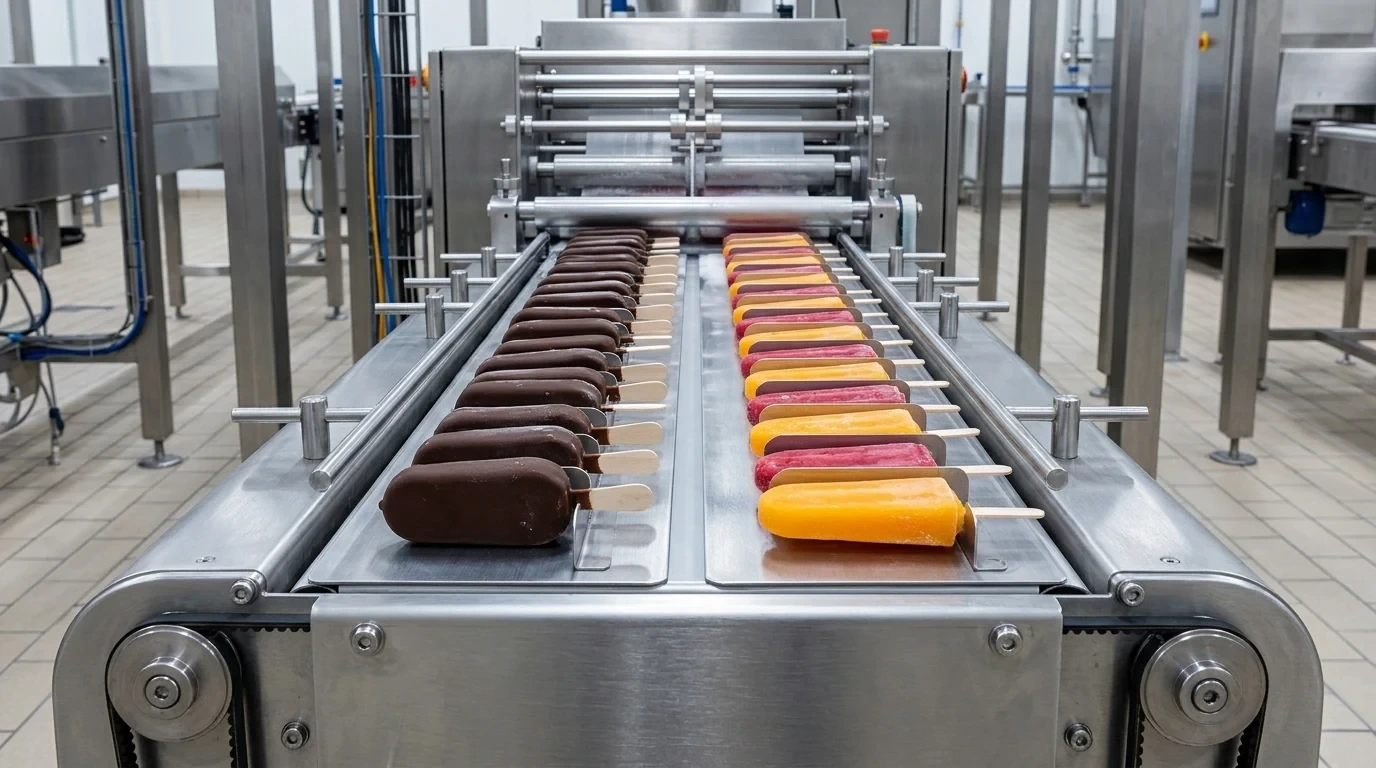
Representative pieces must be measured at their actual size extremes, including irregular edges, surface coatings, and any wooden stick or projection in the information sent for engineering review. For heat-sensitive frozen bars, record the core and surface bar temperature at the packing point, packaging room ambient temperature and relative humidity, and dwell time since hardening or extraction (including after a normal line stop). Note that specifying cold-seal film requires a compatible roller and jaw pressure arrangement and must be trial-tested to verify clean bar release from the web. Compare transfer layouts in our flow wrapper feeding systems guide.
Condensation on sub-zero bars and cold machine beds is governed by psychrometric dew point limits: NOAA defines Dew as moisture condensed on surfaces cooled below the dewpoint temperature, Dew Point (DWPT) as the saturation temperature at constant air pressure and moisture content, Dew Point Depression as the difference between ambient air temperature and dew point, and Frozen Dew as liquid condensation that freezes into ice beads when surface temperatures drop below 0 °C. Dehumidifying the wrapping room to widen the dew point depression prevents frost buildup on infeed guides and moisture contamination in the fin-seal nip.
Cold-Seal vs. Heat-Seal Film Selection and Food-Contact Compliance
Heat seal and cold seal describe bonding methods while fin seal describes the way film edges meet; cold-seal applications use a pressure-bonding coating system, and changing between the methods requires a machine and material assessment. The cold seal process uses pattern-applied pressure-sensitive adhesives (PSAs)—formulated from natural or synthetic rubber latex, resins, plasticizers, and additives gravure-printed only in the fin and cross-seal zones—that bond solely to themselves upon nip contact without external heat. Eliminating jaw heating removes startup warm-up delays, seals up to 10× faster than thermal conduction, and prevents melting frozen ice cream bars or chocolate coatings during brief line stops. Because cold sealing relies on nip pressure alone rather than the coupled temperature, dwell time, and pressure window of heat sealing, setup stays stable across speed ramps. Review film web structures in our flow wrap film guide.
In our horizontal flow wrapping systems, we configure sealing stations for both cold-seal and heat-seal webs: cold sealing protects heat-sensitive frozen novelties at maximum cycle speed, whereas thermal sealing with heated fin wheels and serrated crimpers delivers high-barrier hermetic seams that withstand hot or humid distribution chains. Both sealing routes support mono-PP films, bio-based PLA/PHA/PBS webs, and barrier-coated paper packaging—including paper-forming retrofits that fold paper-based barrier webs without creases or tears, paired with cold-seal coatings such as Henkel Loctite Liofol CS 7106 RE for heat-free paper sealing.
Under U.S. FDA 21 CFR § 175.105(a)(2) and (b), food-packaging adhesives must either be separated from food by a functional barrier or limited to trace exposure at seams within good manufacturing practice so laminates remain firmly bonded without visible separation, and adhesive containers must be labeled "food-packaging adhesive". Under 21 CFR § 177.1520(a)(1)–(2), polypropylene and polyethylene olefin polymers are approved for direct food-contact sealant layers subject to extractive limits.
Fin Wheels, Sealing Jaw Kinematics, and Our Frozen Novelty Wrapper Configurations
With rotary end sealing, opposed jaws rotate and meet across the moving film tube, whereas box-motion jaws close on the film, travel forward during contact, open, and return; dwell is the duration the sealing surfaces remain in contact rather than a single jaw mechanism. On our horizontal flow wrappers, synchronized fin-wheel assemblies pull the web at constant velocity to prevent slippage and wrinkles—using corrosion-resistant stainless-steel fin wheels for cold-seal pressure bonding or thermal-alloy heated fin wheels for heat-seal laminates—while precision-aligned cross-sealing jaws and coordinated hardened-steel cutoff knives separate individual packs without film fraying. Compare end-seal architectures in our flow wrapper types guide and how flow wrapping works guide.
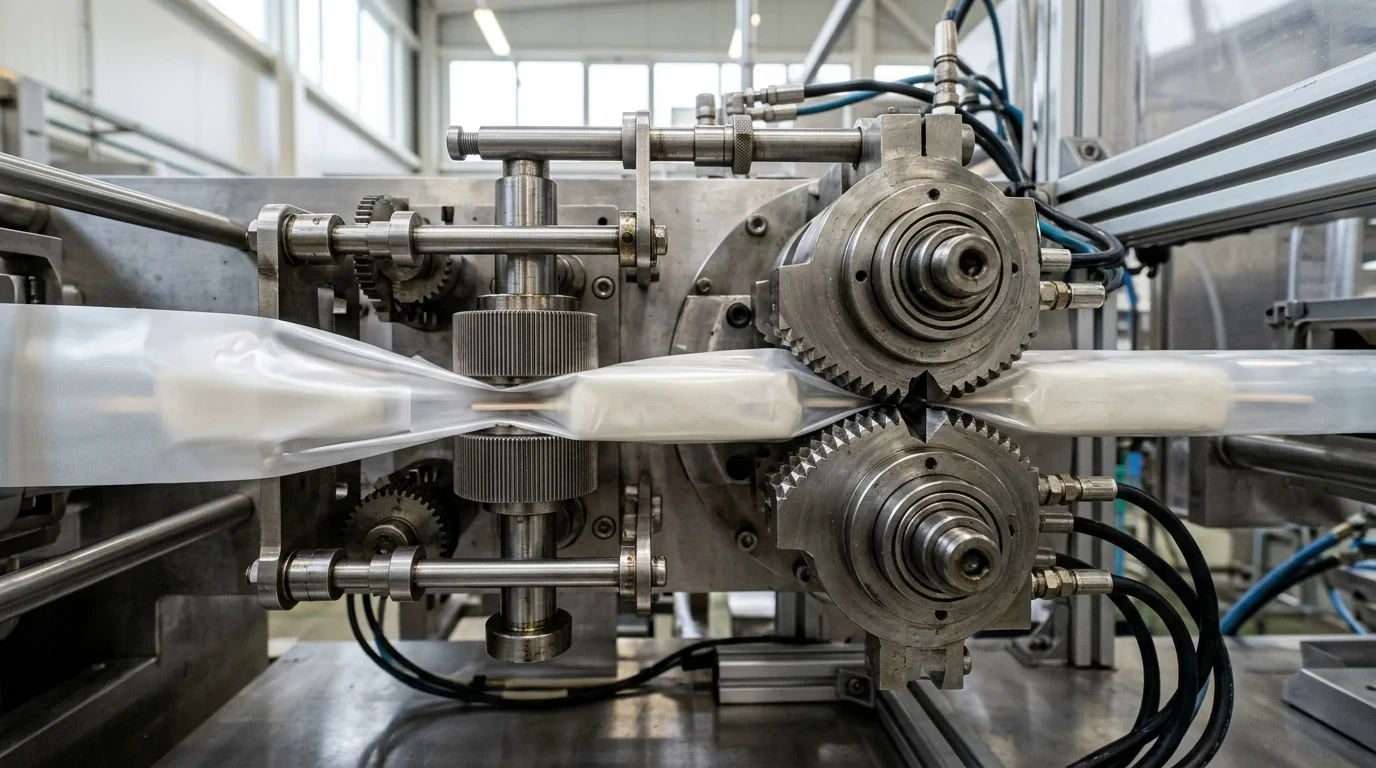
For fixed cut pitch, web speed v (m/min) = cut pitch p (mm/pack) × gross rate q (packs/min) / 1,000, and on a head that makes n packs per revolution, shaft speed is q/n revolutions/min. Accepted output rate equals accepted packs / elapsed minutes (including stops in the elapsed interval when reporting sustained line output), and for planning from a measured running rate, accepted quantity = running rate × actual running minutes × accepted fraction. In the requirements checklist, accepted output rate = accepted-pack count / elapsed trial minutes, and for line accumulation, buffer change (pack units) = incoming pack-unit count − outgoing pack-unit count over the same interval.
To serve single-lane stick extractors, multi-lane moulding carousels, and high-sanitation frozen novelty plants, we engineer six horizontal flow wrapper configurations for ice cream bars and popsicles:
- Mid-Speed Cantilever Cold/Hot-Seal Platform: Supports both cold-seal and heat-seal films up to 450 mm wide at 150–350 ppm (1-up to 3-up crimpers), built with food-grade stainless-steel contact surfaces, cantilevered infeed, auto-opening fin wheels, and cutting head.
- High-Speed Hygienic Washdown Rotary Platform (Up to 600 PPM): Full washdown stainless-steel construction across the infeed, three separately housed fin-wheel sets, electrical enclosure, and discharge, with tool-less changeovers, full-servo control, and pullnose belt or robotic pick-and-place infeeds for fresh and frozen bars.
- Multi-Jaw IP66 Washdown Rotary Platform (Up to 300 PPM): Combines a stainless-steel washdown frame, IP66 environmental protection, independent PID temperature control, and automatic jam detection and clearance for high-humidity frozen novelty rooms.
- Cantilever Stainless Wet-Environment Rotary Series (200 to 1,000 PPM): Ranges from our compact 3-roller-pair wet-environment rotary configuration (2 m infeed, 7" industrial PC touchscreen, no-product-no-bag, misplaced-product double-bag logic) up to our 4-servo, 4-roller-pair high-speed cantilever wrapper operating at up to 1,000 packs/min with automatic reel splicing, optional water-cooled cold-plate sealing rollers, inter-roller vacuum aspiration, D-cam jaws, and defective-pack rejection.
- Hermetic Box-Motion & Orbital Washdown Platforms (Up to 150 PPM): For multipack trays or heavy barrier films in wet frozen rooms, our cantilevered stainless Box-Motion configuration provides removable washdown infeed conveyors and twin-motor reciprocating jaws, while our vertical-plate Wash-Down Orbital Long-Dwell platform withstands pressurized hot-water and detergent cleaning at up to 150 packs/min in top-reel, bottom-reel, or side-seal versions.
- Modular Ultra-High-Speed Confectionery & Multipack Systems: For high-volume molded pieces and secondary multipack lines, modular sealing heads allow rapid changeover between cold sealing, heat sealing, and seam welding at primary speeds up to 1,200–2,000 pieces/min and secondary multipack web speeds up to 140 m/min.
| Configuration parameter | Cold-seal pressure bonding | Heat-seal thermal bonding |
|---|---|---|
| Bonding mechanism | Pattern-coated PSA bonds to itself under unheated fin-wheel and jaw pressure | Heated fin wheels and serrated jaws melt thermoplastic sealant under PID heat, dwell, and pressure |
| Line-stop thermal exposure | Zero heat-up delay; no radiant heat to melt frozen bars or chocolate coatings during stops | Requires pneumatic auto-open fin wheels, water-cooled transfer plates, and jaw-clearance logic |
| Speed & sealing window | Seals up to 10× faster; single-variable pressure control remains stable across 200–600+ PPM ramps | Dwell narrows with speed; requires multi-up crimpers, D-cam profiles, or orbital long-dwell heads |
| Washdown & condensation fit | Unheated stainless knurled fin wheels and crimpers; keep room air below dew point to prevent moisture on PSA | IP65/IP66 washdown enclosures, sloped drainage frames, and higher clamp force through frost traces |
Hygienic Washdown Architecture and Sanitary Equipment Design
Under 21 CFR § 117.40(a)(1)–(5), plant equipment and utensils must be designed and constructed of corrosion-resistant, nontoxic materials to be adequately cleanable, prevent adulteration with lubricants or metal fragments, and withstand food, cleaning compounds, and sanitizing agents. Under 21 CFR § 117.40(b)–(c) and (e), seams on food-contact surfaces must be smoothly bonded to minimize organic accumulation, non-food-contact assemblies must remain cleanable, and cold storage compartments must be fitted with temperature-measuring or recording devices.
Because frozen novelty lines cycle between sub-zero product transfer and warm washdown sanitation, our hygienic flow wrapper QA checklist verifies: (1) AISI 304/316 stainless-steel grades across the frame and product contact zone, (2) continuous ground-smooth welds with zero bacteria traps, (3) sloped horizontal surfaces that shed washdown water and condensation toward drainage points, (4) IP65/IP66 protection on electrical cabinets and servo motors, (5) tool-free access to belts, former guides, and sealing jaws, and (6) a complete sanitation and dry-out cycle demonstration during factory acceptance testing (FAT).
Sample Trials, Peel-Strength Validation, and Gross Leak Testing
A factory acceptance trial must record sample identity, dimensional variation (including stick angle), surface frost condition, product core temperature, wrapper configuration, and behavior after a line stop and restart—because visual inspection alone cannot confirm hermetic seal integrity.
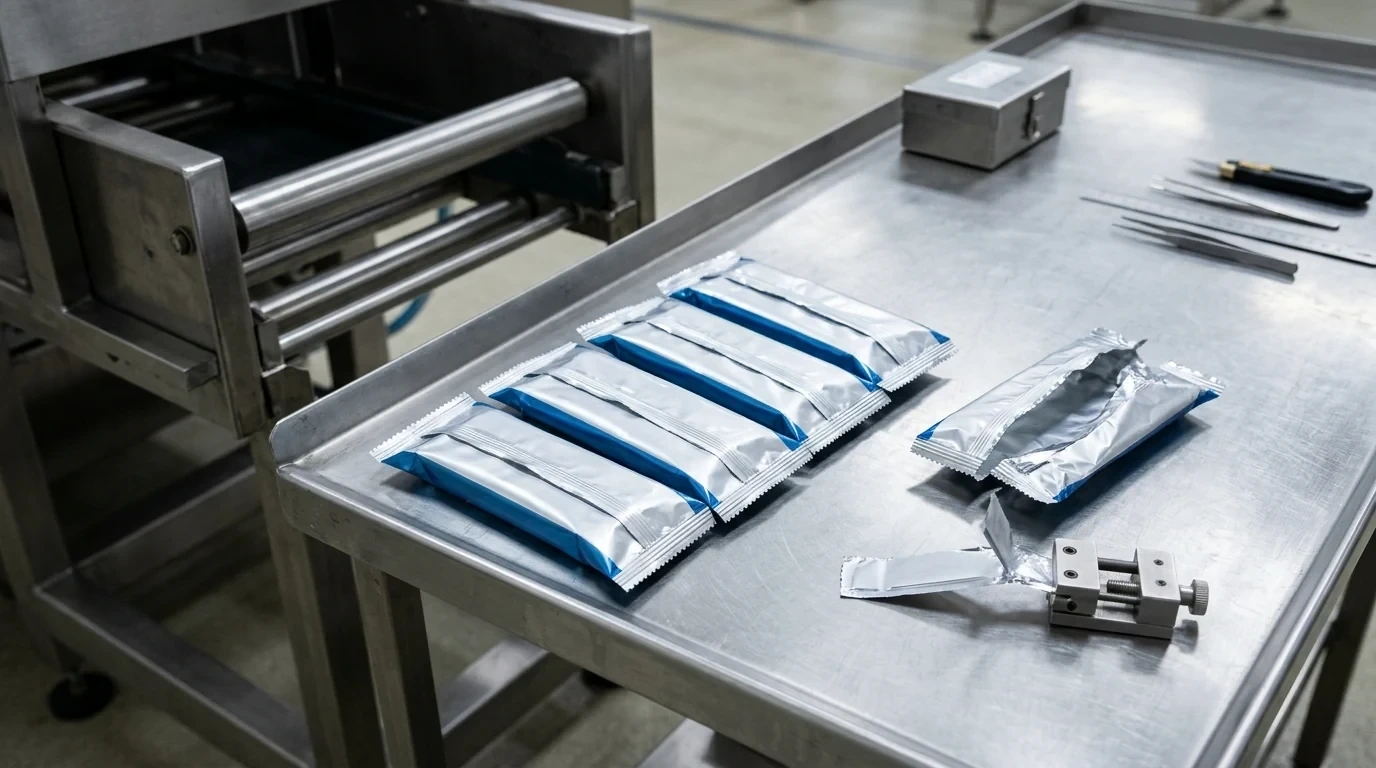
We validate frozen novelty package seals against three ASTM standards:
- ASTM F88/F88M-23 (Clauses 1.1–1.5, 4.1, 4.2–4.2.3): Measures the force required to separate a flexible barrier seal strip and identifies the failure mode using consistent tail-holding geometry—Technique A (Unsupported), Technique B (Supported 90° by hand), or Technique C (Supported 180°)—confirming both minimum seal strength for distribution and maximum peel force for easy consumer opening.
- ASTM F1921/F1921M-12(2018) (Scope 1.1, Clause 5.1): Measures hot-tack strength of thermoplastic heat seals immediately after jaw release before the seam cools to ambient temperature.
- ASTM F2096-11(2019) (Scope 1.1, 1.3): Detects gross leaks in pouch packages by internal air pressurization (submerged bubble test) with a sensitivity down to 250 μm (0.010 in.) at 81% probability.
Prepare Your Ice Cream Bar or Popsicle Flow-Wrapping Brief
Use our flow wrapper requirements checklist to compile your bar and stick dimensions, core temperature at infeed, film structure (cold-seal or heat-seal), target output, extractor or feeder interface, and plant utility and washdown requirements before requesting a machine configuration review from our engineering team.
Discuss your ice cream bar or popsicle project on WhatsApp
Does a horizontal flow wrapper fill liquid ice-pop tubes before freezing?
No. Our horizontal flow wrappers package solid frozen bars, moulded popsicles on wooden sticks, and pre-assembled ice cream sandwiches. Unfrozen freeze-at-home liquid tubes (30–500 ml) require a vertical liquid form-fill-seal (VFFS) machine equipped with a piston dosing pump running at 30–50 bags/min.
When is cold-seal film preferred over heat-seal film for ice cream bars?
Specify pattern-coated cold-seal film when wrapping chocolate-enrobed bars or high-speed stick novelties (200–600+ ppm) where radiant jaw heat could melt coatings during brief line stops. Cold sealing bonds via nip pressure alone up to 10× faster than thermal sealing without startup warm-up delays.
Sources
- LINEVO Horizontal Flow Wrapping Engineering Specifications — Frozen Novelty, Cold-Seal, Chilled-Plate, and IP65/IP66 Washdown Platforms
- NOAA National Weather Service — Atmospheric Moisture Glossary: Dew, Dew Point, Dew Point Depression, and Frozen Dew
- University of Bologna Pack Innovation Lab & Packaging Strategies — Cold-Seal Pressure-Sensitive Adhesive (PSA) Mechanics and Confectionery Applications
- Henkel — Loctite Liofol CS 7106 RE Cold-Seal Coating Technical Release for Barrier-Coated Paper
- U.S. Food and Drug Administration — 21 CFR § 117.40 Sanitary Equipment Design, 21 CFR § 175.105 Food-Packaging Adhesives, and 21 CFR § 177.1520 Olefin Polymers
- ASTM International — ASTM F88/F88M-23 Seal Strength, ASTM F1921/F1921M-12(2018) Hot Tack, and ASTM F2096-11(2019) Internal Pressurization Bubble Leak Testing
Before you request a quote
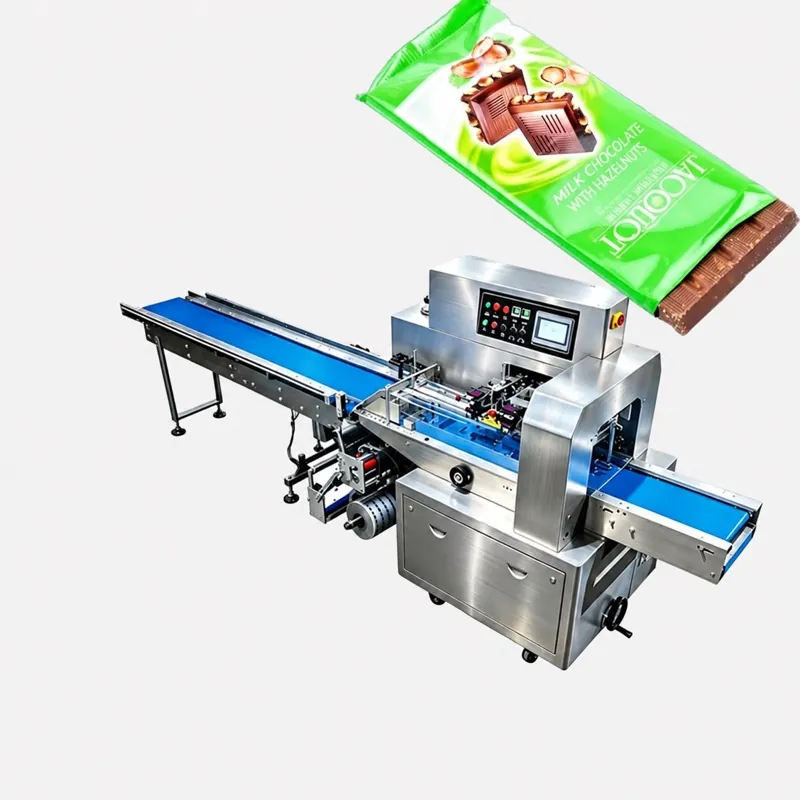
Chocolate Bar Wrapping and Packaging Machines
Chocolate bar flow wrappers from LINEVO. Configure feeding and film sealing around bar temperature, surface protection and the required pack finish.
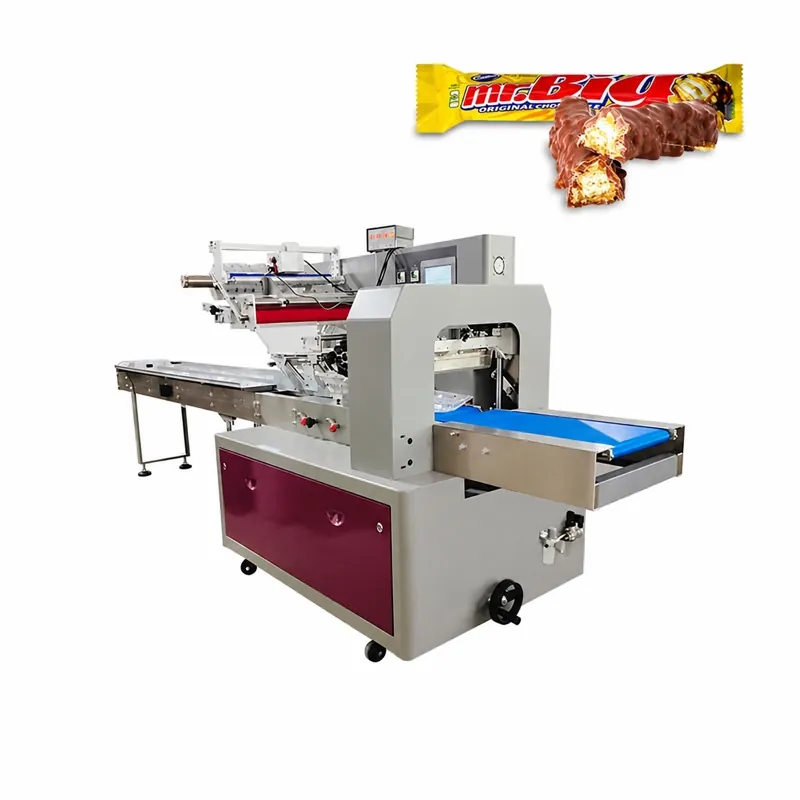
Cereal, Granola and Protein Bar Packaging Machines
Flow wrapping configurations for cereal, granola and protein bars. Review product release, feeding, coating condition and film trials with LINEVO.
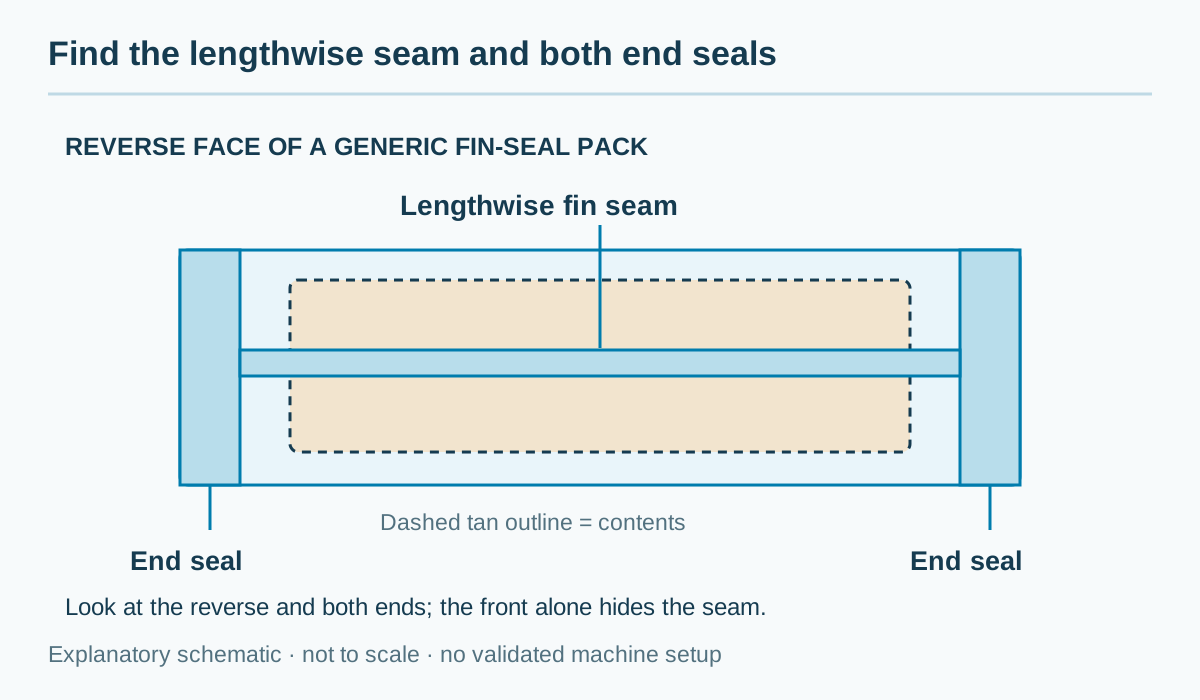
Flow Wrap Packaging: How It Works and When to Use It
Flow wrapping uses reel-fed film to make a pack with a lengthwise seal and two end seals. Check the pack format, product handling and film before choosing a machine.