
Start with Product and Packaging Requirements
Choose flow wrap film by matching three things: the protection the product needs, the surfaces that must seal together, and the reel and forming requirements of the proposed machine. A material name such as BOPP, PE or laminate is only a starting point. Ask for the exact converted film specification and assess it with your product before ordering production reels.
Record the product's condition at packing: warm or cooled, dry or moist, oily, sticky, fragile or frozen. Include the whole pack arrangement, including a tray, support card or grouped items. Then describe storage, distribution, opening requirements and the appearance you want. The flow wrap packaging overview explains the package and process if you are still choosing a format.
This guide concerns equipment compatibility. It does not establish film supply availability, a film price or a shelf-life result.
Film Structure and Seal Compatibility
Ask the film converter for a technical data sheet identifying each layer or coating, the sealing face, total thickness and tolerances, friction data, and recommended storage and sealing conditions. For food contact, request documentation applicable to the intended product and destination market. Keep the material grade, converter reference and reel batch together so a trial can be repeated.
Jindal Films' Our Brands material overview describes BOPP grades used as single webs or in laminates, with different coatings and sealing applications. That range is a reason to identify the grade: a transparent film, metallized structure and coated film can have different functions even when all are described as polypropylene packaging.
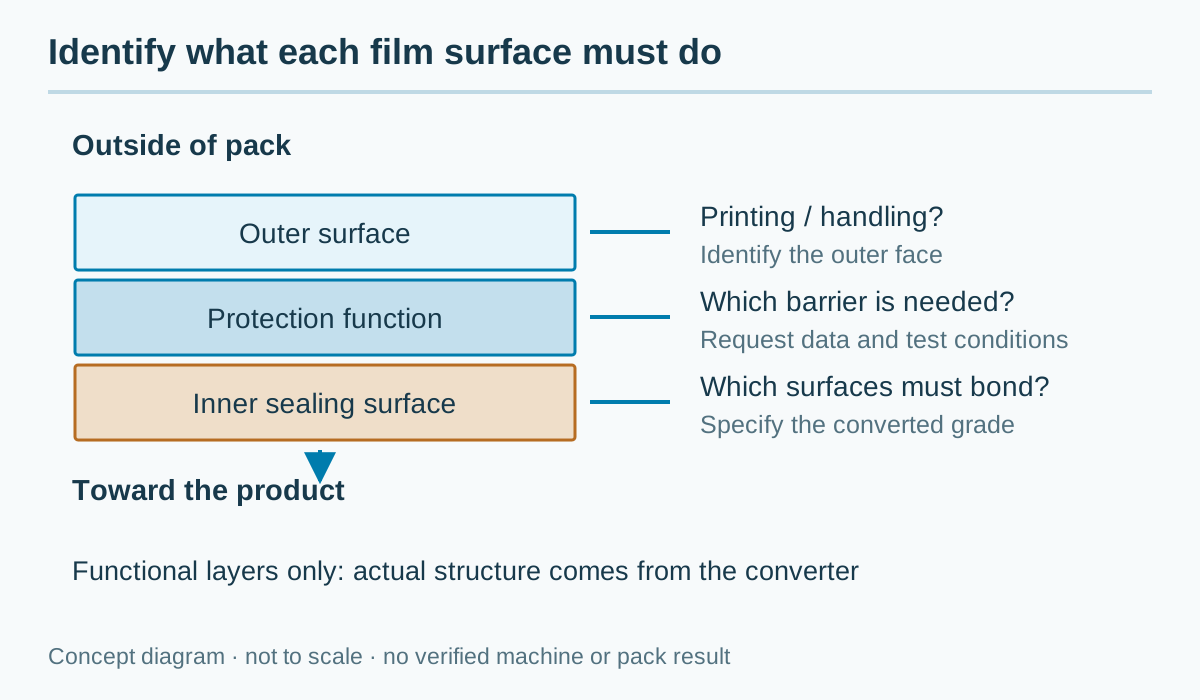
Request the proposed film's stiffness and friction information for forming and transport, plus puncture or tear information where the product has sharp edges. Ask the equipment supplier which properties it needs to assess. Neither a thinner structure nor a mono-material description confirms that an existing former, transport system and sealing head will run it satisfactorily.
Heat Seal, Cold Seal and Fin Seal
Heat seal and cold seal describe bonding methods. Fin seal describes the way the film edges meet. These terms answer different questions and belong in separate fields on the pack specification.
In a heat-seal application, compatible surfaces bond under specified heat, pressure and contact time. Bostik's Cold Seal Adhesive Coating Tips describes coatings that seal without added heat. Cold-seal applications use a pressure-bonding coating system; ask the converter to identify the coated pattern, mating faces and handling requirements. Changing between the methods requires a machine and material assessment, rather than simply changing an operator setting. Carry heat-sensitive products into that discussion without assuming cold seal is automatically the answer.
In a fin seam, the film's inner faces meet along the longitudinal edges. In an overlap or lap seam, an inner face meets an outer face. Bosch's Guide to Vertical Form-Fill-Seal Baggers describes this distinction between mating surfaces; it also applies when specifying the longitudinal seam of a horizontal flow pack. The material and sealing system must support the proposed contact surfaces. Confirm both the longitudinal seam and the two end seals on a pack drawing.
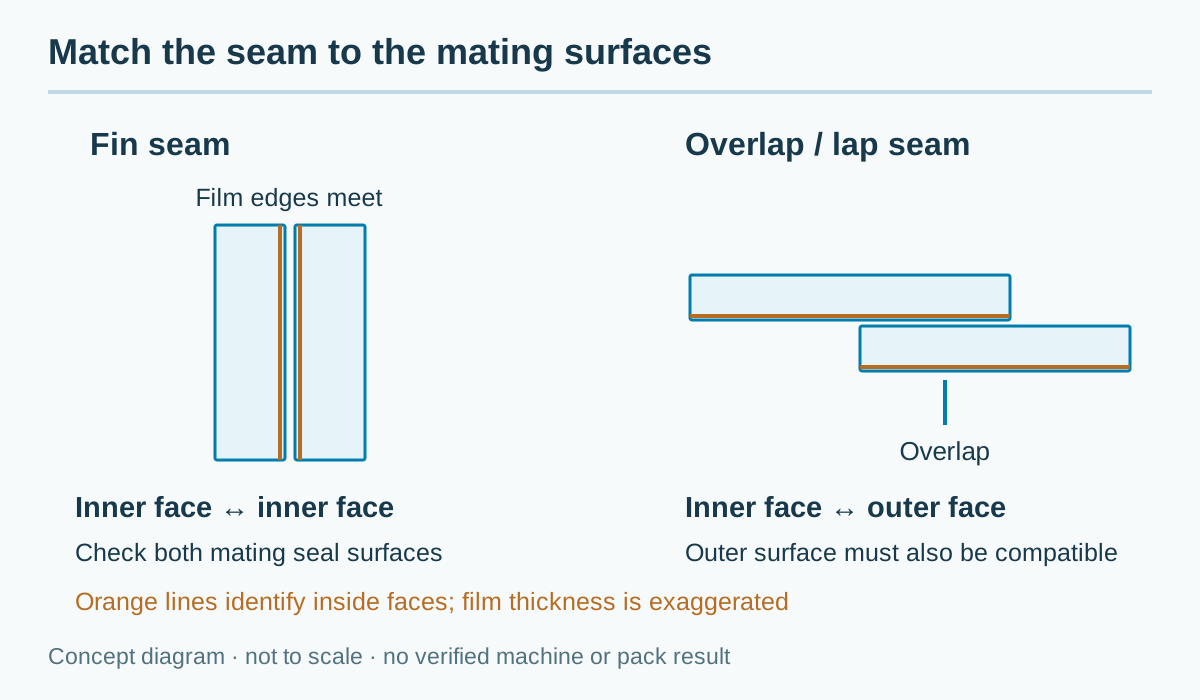
Syntegon's sealing guidance connects film and product selection with sealing temperature, pressure, dwell and alignment. Ask how the proposed longitudinal and end-sealing systems will be assessed with your material. The flow wrapper types guide separates jaw motion and film path from the bonding method.
Film Width and Bag Length
Keep product dimensions, film width and finished pack length separate. Measure the largest and smallest complete product arrangements, including height variation. Film has to form around that arrangement and provide the specified longitudinal seam allowance; the end seals need clear space between products.
Send the converter and equipment supplier a reel drawing showing width, core size, outside diameter, winding direction and which face unwinds toward the product. Include reel mass for the machine assessment. For printed film, add the artwork repeat, registration-mark position and intended cut location. Ask both suppliers to approve the same drawing before a production order.
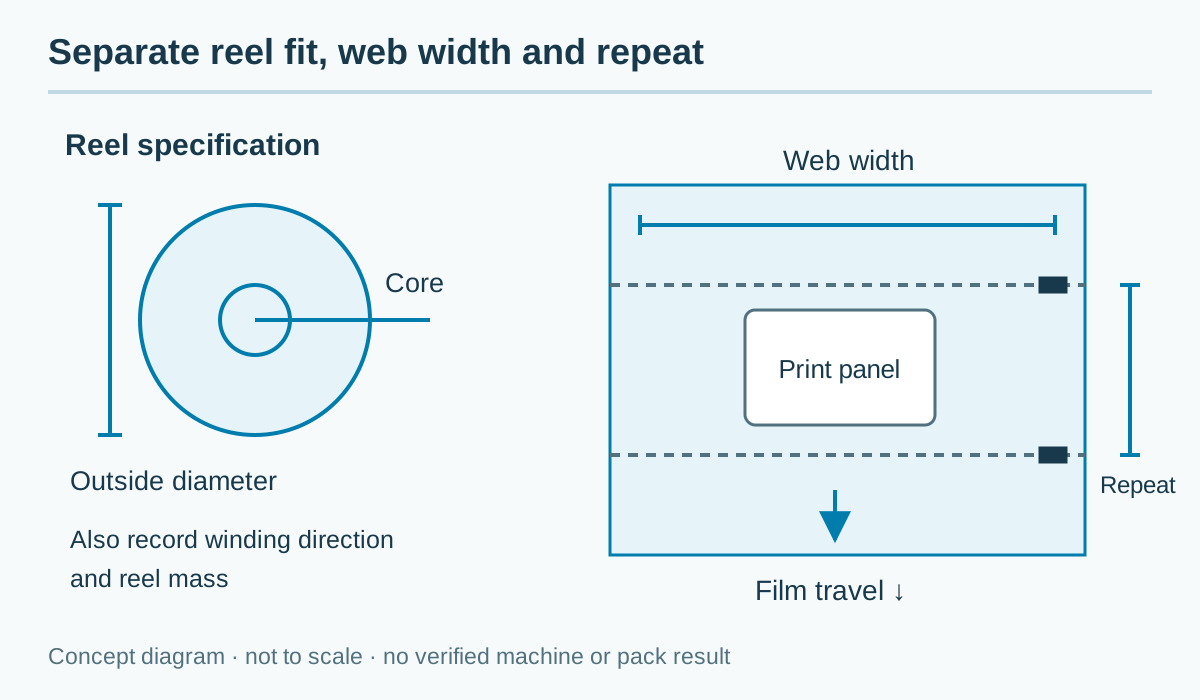
An existing pack sample helps, but it does not settle the new reel specification. Ask for forming and sealing clearance to be checked on the proposed machine. The film width and bag length guide develops those measurement questions.
Barrier and Product-Specific Tests
Describe the failure you need to prevent: moisture change, oxidation, aroma loss, grease transfer, puncture or damage in distribution. Request relevant film data with its measurement conditions. Oxygen and water-vapor transmission figures need their test temperature, humidity and method to be meaningful in a comparison.
Agree how finished packs will be checked as well as flat film. A barrier data sheet cannot show whether a real pack has a contaminated seam or damage from handling. Ask for appropriate seal-integrity checks, product-contact assessment and storage or distribution evaluation. Establish shelf-life requirements with a suitable product testing plan; this guide offers no shelf-life guarantee.
If recyclability is part of the brief, request evidence for the complete converted structure and the intended collection market. Treat machine compatibility and end-of-life claims as separate checks. Printing, coatings and other pack features belong in that review too.
Estimate Film Consumption
Prepare an estimate from the approved web width, cut repeat and planned pack quantity. Convert area to mass only with the actual film's mass-per-area data, or a converter-approved calculation for its structure. A reel's usable length also matters when planning changes and stock.
Keep theoretical material per pack separate from material actually consumed. Record startup, threading, splice and changeover losses, trial material and rejected packs over the same observation period. Compare material cost per accepted pack alongside seal quality and product loss.
Film cost factors include structure and coatings, printing and artwork setup, order quantity, reel conversion, freight and the waste observed in use. A quotation by mass alone will not establish the cost of a finished acceptable pack. Obtain a material-specific quotation rather than applying a generic film price.
Test Your Film and Product Together
Agree the trial questions before sending material:
- Identify the product condition, size extremes, pack drawing, film grade and reel batch.
- Have the supplier assess reel loading, unwind direction, forming, tracking and registration using the machine's approved procedures.
- Record the assessed machine configuration and running conditions, including both sealing systems. Include startup, normal running and restart behavior in the agreed trial.
- Retain labeled packs for the agreed seal, appearance, opening and product-damage checks. Record rejects and their causes alongside accepted output.
- Compare results with written acceptance criteria. List unresolved issues and repeat relevant checks after a film, product or tooling change.
No product-and-film trial result is represented here. Discuss your film and pack requirements on WhatsApp. Share the film data sheet, reel drawing, product photos and existing pack details, and ask which compatibility questions still need a trial.
Common Questions
Can I choose flow wrap film from the polymer name alone?
No. Identify the converted grade, layers or coatings, mating seal surfaces and reel specification. Assess those details with the product and proposed machine.
Is fin seal the same as heat seal?
Fin seal describes how film edges meet. Heat seal describes how compatible surfaces are bonded. Specify seam geometry and bonding method separately.
Does a barrier film guarantee shelf life?
No. Flat-film data does not verify finished-pack integrity or the behavior of the packed product. Agree suitable pack and product testing under the intended storage and distribution conditions.
Sources and Scope
Jindal Films supports the material-category discussion, Bostik the cold-seal coating description, and Syntegon the sealing-system variables. The Bosch handbook supports the fin-versus-overlap seam distinction; its vertical-machine examples are not horizontal-wrapper specifications. Their specifications and capabilities are not LINEVO specifications. The figures are explanatory schematics rather than pack-test evidence.
In this section
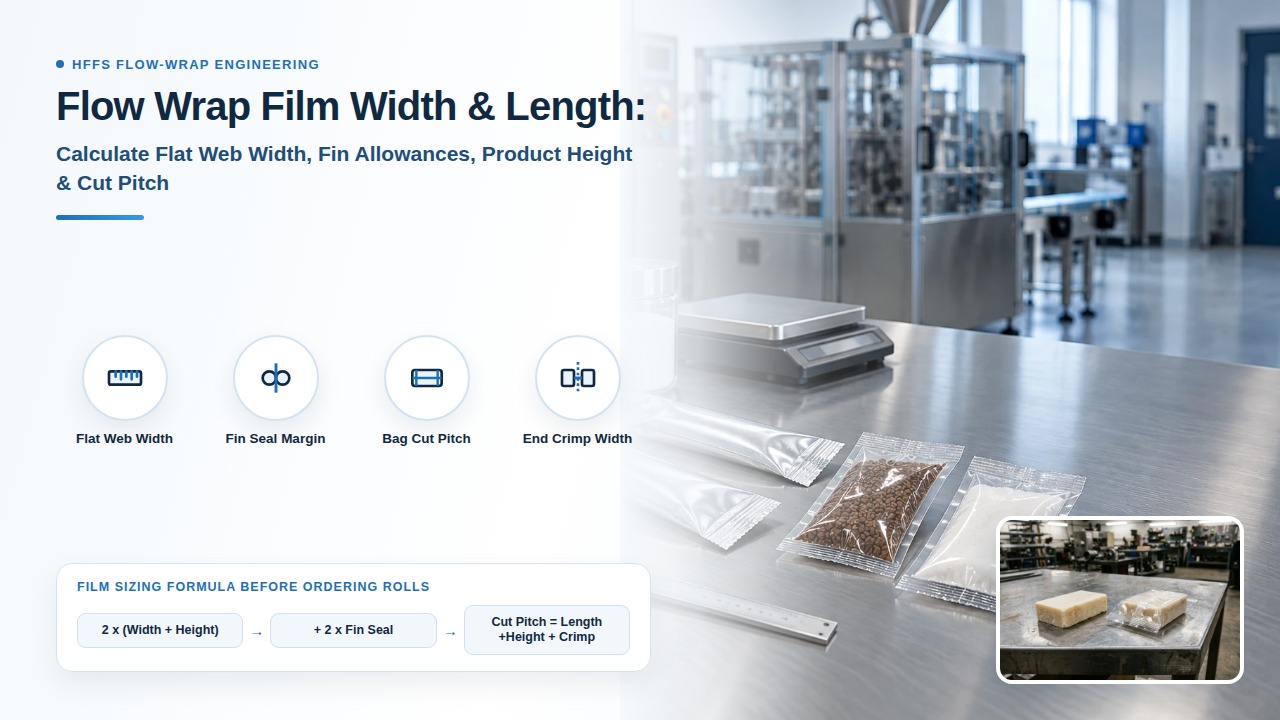
Flow Wrap Film Width and Bag Length: Sizing Guide
Calculate flow wrap film web width (W_web) for fin vs lap seals, cut-to-cut bag length (L_cut), side gussets, eye-mark repeat pitch, and packs per roll yield.
Read more