
What is flow wrap packaging?
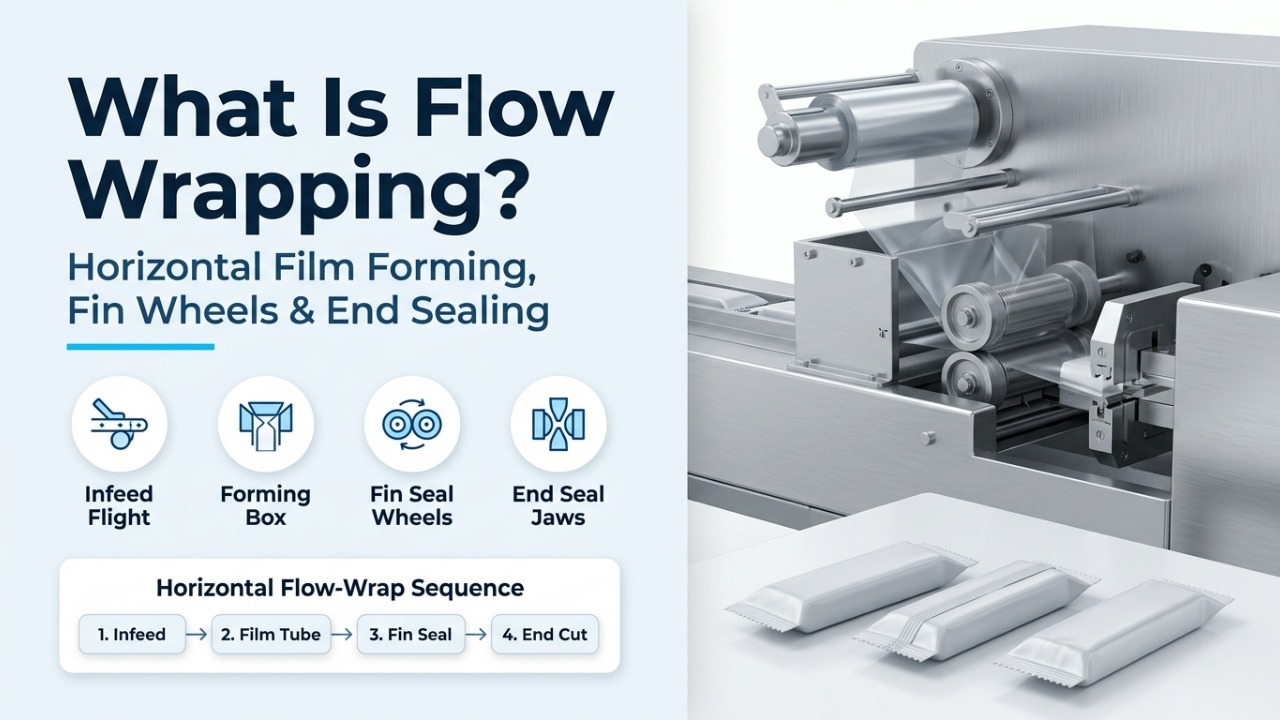
Flow wrap packaging forms a flexible wrapper around a product as it travels horizontally through a machine. A typical pack has one seal along its length and a seal at each end. The process uses film from a reel; the equipment is called a horizontal flow wrapper or horizontal form-fill-seal machine, often shortened to HFFS. ULMA's process definition describes this three-seal arrangement.
To compare flow wrapper machines, first describe the pack, film and way the product will enter the machine.
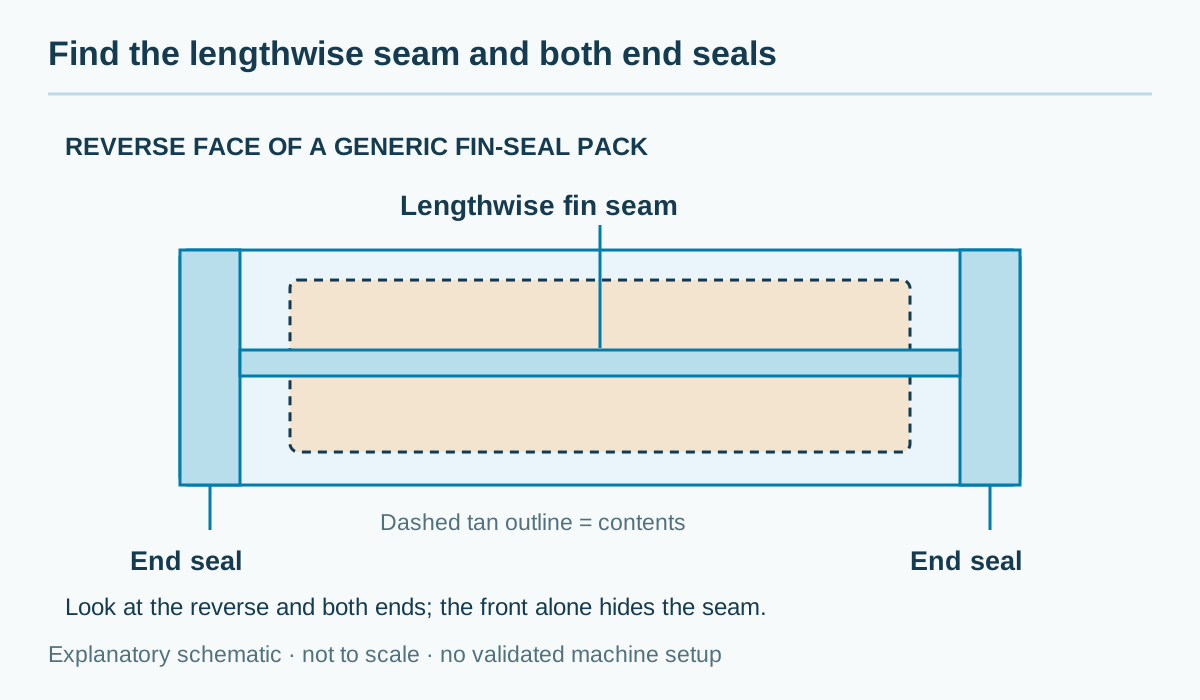
Look at the three seals
The lengthwise seam joins the film into a tube around the product. The end seals close that tube before and after the product. On a common fin-seal pack, the joined film edges form a narrow seam along the wrapper.
For an initial assessment, photograph the front, back and both ends of an existing pack. Include a ruler and say whether the product is loose inside, supported by a tray or grouped with other pieces. The engineer needs to see the seams as well as the front of the pack.
How the process works
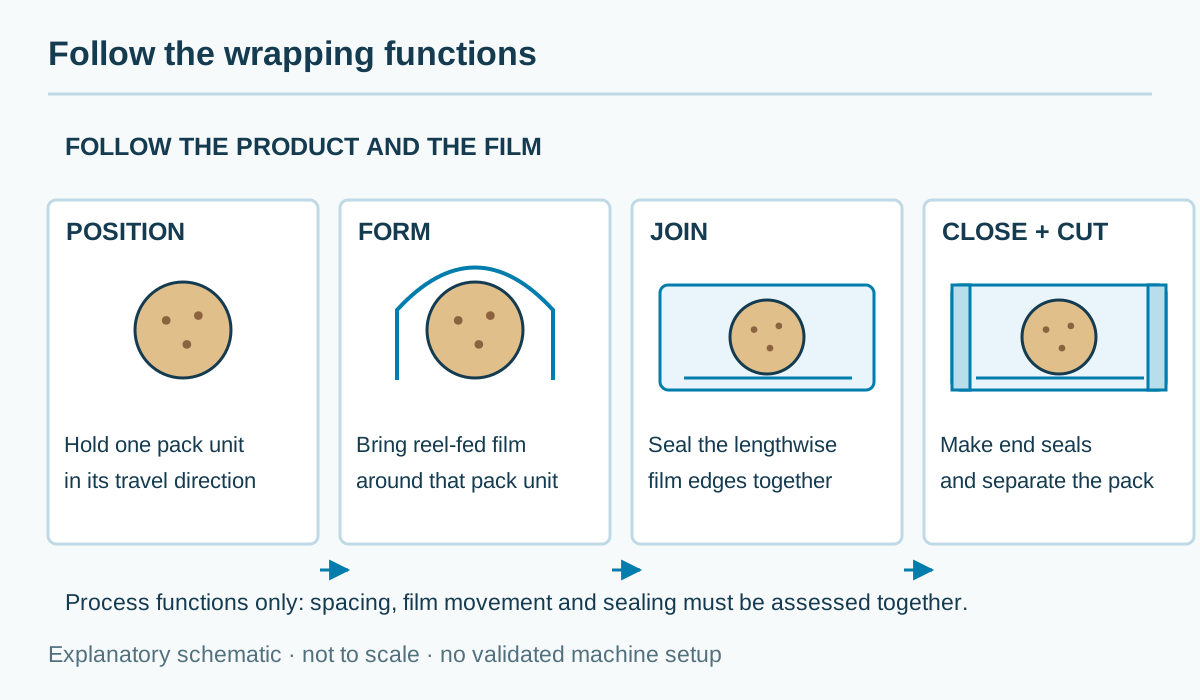
The product enters the wrapping section in a controlled position. Film forms around it, the longitudinal sealing section closes the tube, and the end-sealing and cutting section separates individual packs. Film movement, product spacing and the end-sealing cycle must work together.
Syntegon's sealing and cutting overview explains the different roles of fin wheels, sealing jaws and knives. These are process functions, not instructions for adjusting a running machine. For the sequence in more detail, see how flow wrapping works.
Could your product be flow wrapped?
Bread, biscuits, bars and other individually presented solid products are common starting points. A group or tray can also be wrapped. For your product, check whether the item or group can be held in position with room for the seals. Syntegon's horizontal packaging overview illustrates these application and pack-format categories.
Use these questions in your first discussion with the supplier.
| Your requirement | Information to send | Decision to request |
|---|---|---|
| One solid item per pack | Size range, photos and product condition | Can the item be fed and supported without damage? |
| A stack, group or tray | Arrangement and total pack dimensions | How will the group stay together at the infeed? |
| A soft, sticky or fragile product | A short handling video and temperature at packing | What feeding arrangement needs a sample trial? |
| Loose powder, liquid or granules | Dose, product behavior and a pack sample | Is a filling process needed instead of wrapping a discrete product? |
| A tight-fitting or different seal format | Photos of every face and seal | Is flow wrapping actually the intended process? |
The term HFFS also appears in Volpak's description of horizontal pouch machines. Describe the finished pack when comparing equipment. The HFFS guide and flow wrap versus shrink wrap comparison cover those process choices.
Check film and sealing together
Check how the proposed machine will seal the film. Heat sealing depends on the material and the combination of temperature, pressure and contact time. Cold-seal systems are another option for suitable materials and applications. Paper-based materials and mono-material films need a compatible machine configuration; their appearance alone does not establish compatibility. These distinctions are described in Syntegon's sealing and materials overview.
Send the film supplier's specification and a reel sample when available. Ask the engineer to identify what is confirmed, what is optional and what still needs testing. The flow wrap film guide covers the material questions separately.
What to send for an assessment
Gather what you know:
- The smallest and largest product dimensions, with units.
- Product condition at packing and the number of pieces in each pack.
- An existing pack or drawing showing the required seals and presentation.
- The film specification, or a clear note that film has not been selected.
- How products arrive and the equipment immediately before and after the wrapper.
- Your target in good packs per minute, and the checks that define an acceptable pack.
You can copy these details into the requirements checklist. If you are packing bakery products or non-food products, include the arrangement and any tray or bottom-film carrier used.
Where to go next
Use this page to name the pack. The later pages answer one decision each.
| Decision | Stay on this page when | Open the next page when |
|---|---|---|
| Sealing motion, film path or feeding | You are still describing the three seals | Compare flow wrapper types |
| Film structure and reel | You only know that film comes from a reel | Choose flow wrap film |
| Flow wrap or another horizontal process | The pack has one long seal and two end seals | Separate HFFS routes |
| How the machine sequence runs | You need the short definition only | Read the process steps |
Flow wrapper types compares sealing, film direction and feeding. Flow wrap film is the material brief. HFFS machines separates this flow-wrap pack from horizontal pouching. Non-food flow wrapping covers soap bars, sponges, wet wipes, cutlery kits and hardware parts. How flow wrapping works walks through the sequence.

Send your product details on WhatsApp and include any questions about film or feeding. You can start with a photo if the pack specification is still undecided.
Common questions
Is flow wrapping the same as horizontal form-fill-seal?
Horizontal flow wrappers form the wrapper from reel-fed material around the product and close it in the machine. The HFFS label is also used for other horizontal packaging systems, so confirm the pack format when comparing proposals.
Can more than one product go in a flow pack?
Yes, the format can enclose a group or a tray. Whether your group can be handled consistently depends on the feeding and support arrangement and must be assessed for the actual product.
What if I have not chosen a film?
Send the product and pack requirements, mark the film as undecided, and ask which material specifications and samples are needed before a configuration can be confirmed.
Does this guide confirm a LINEVO machine specification?
No. It explains process choices and assessment questions. Ask for the proposed configuration and the product, film and running conditions used to verify it.
Sources and scope
The linked manufacturer references support the general process description. Their machine options and performance figures are not specifications for equipment supplied by LINEVO. This guide does not present a customer installation or a sample-test result.