
What HFFS Includes
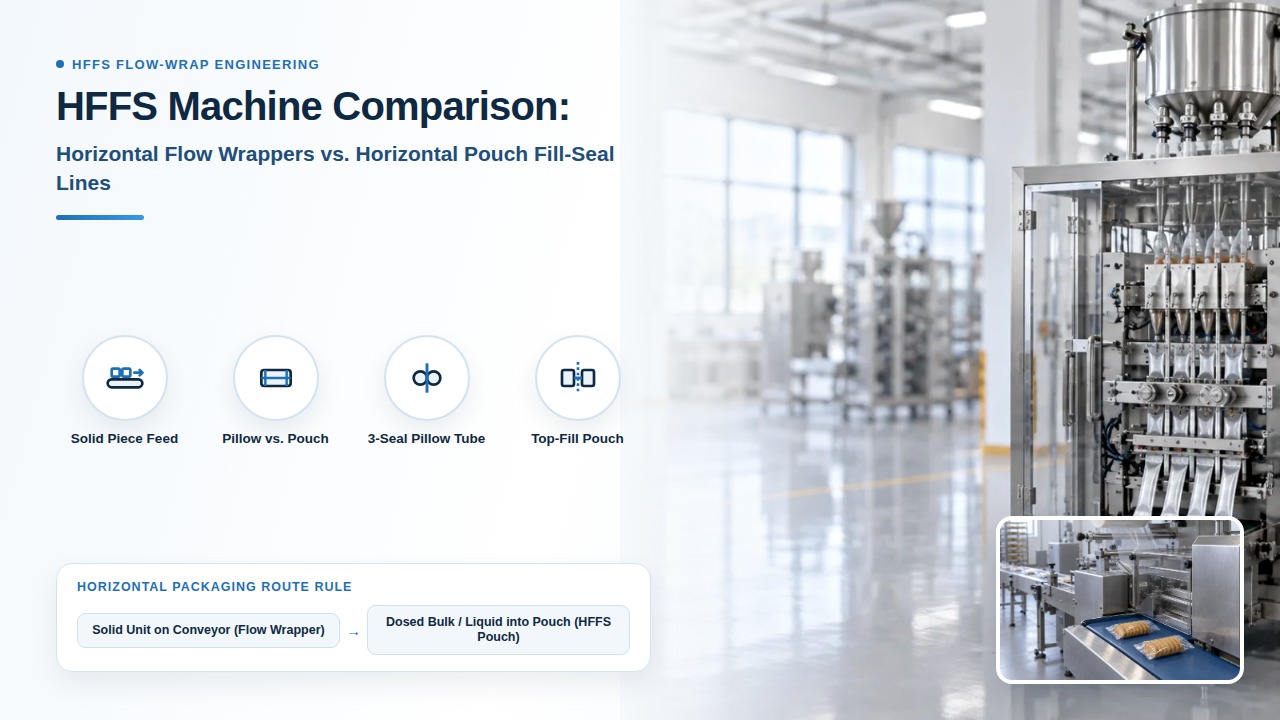
An HFFS machine may be a horizontal flow wrapper or a horizontal pouch form-fill-seal system. These are different processes. Choose by the finished pack and how the product enters it: film can form a tube around a supported item, or a pouch can be formed and filled through an opening. The acronym alone does not identify the equipment you need.
ULMA's HFFS category describes horizontal flow wrapping with a lengthwise seal and two end seals. Volpak's pouching overview uses HFFS for equipment that forms and fills pouches through successive stations. When requesting proposals, send a pack sample or drawing instead of relying on the HFFS label.
Flow Wrapping for Individual Products
Horizontal flow wrapping forms reel-fed film into a tube around an item moving through the machine. One long seal joins the film edges, and two end seals close the wrapper before and after the product. A common fin-seal pack has a narrow lengthwise seam visible on its back.
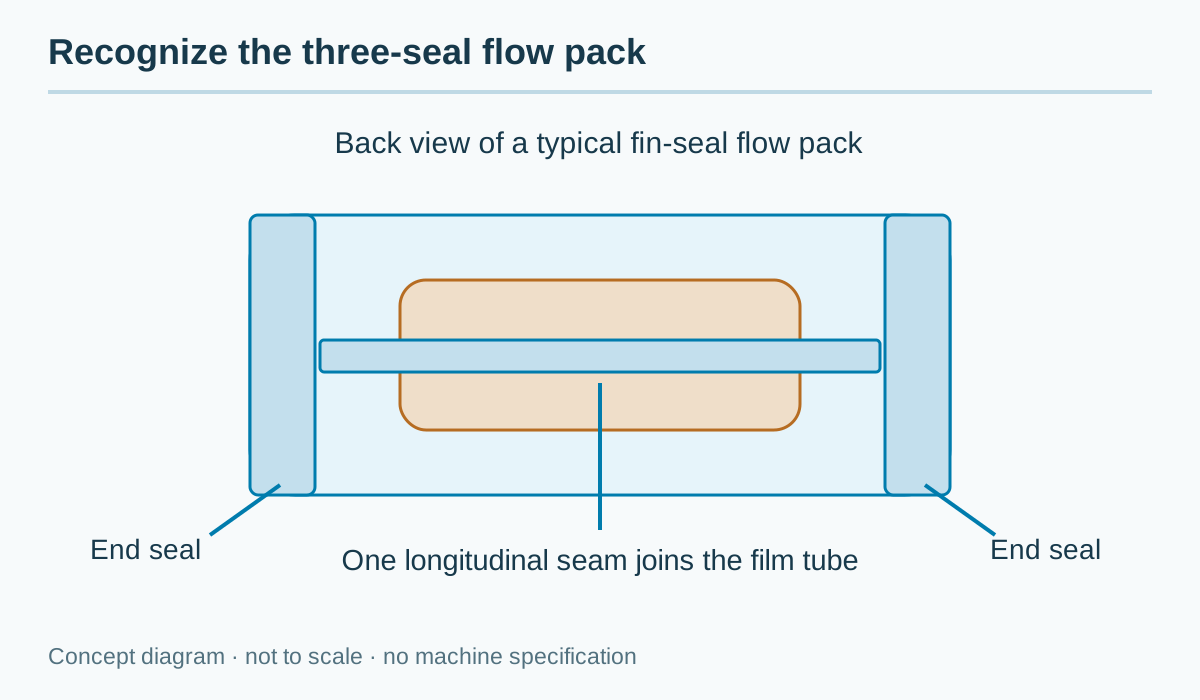
A product can be one item, a controlled group or a tray. Before selecting this route, show whether the product holds its shape and position at the infeed, how the group is maintained and where the seals can close without trapping the contents. Send photographs of the front, back and ends of the intended pack.
For this route, continue with flow wrap packaging and the feeding, film-path and sealing comparison. Product-specific handling and film compatibility still need assessment; recognizing a three-seal pack does not confirm a machine configuration.
Horizontal Pouch Form-Fill-Seal Systems
A horizontal pouch form-fill-seal system makes pouches from reel-fed material, introduces product through an opening and closes the filled pouch. The pouch structure, dosing method and closing arrangement depend on the application. Horizontal describes the equipment's process arrangement; it does not require the contents to enter the pouch sideways.
Volpak describes an intermittent pouch process in which pouches pause for operations such as forming and filling, then move to the next station. Other machine architectures exist, so ask for the actual process sequence. Bartelt's HFFS pouch descriptions also show that horizontal pouch equipment can address formats such as zipper pouches, with application-dependent equipment choices.
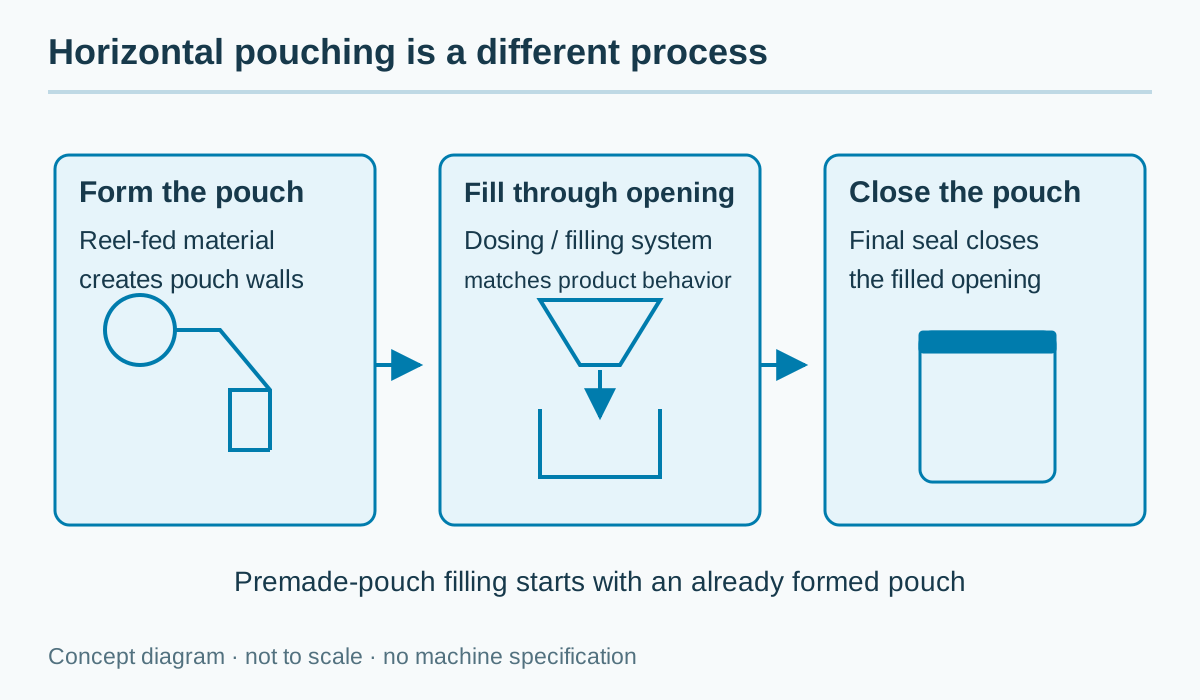
Premade-pouch filling starts with a pouch that already exists; it does not form that pouch from a reel on the filling machine. Keep that distinction in the enquiry. A required zip, spout, gusset or flat pouch should be shown in the pack drawing, along with how the pack is supplied and how it must be opened or reclosed.
For liquids, powders or loose pieces, describe the dose, product behavior and condition at packing. Ask how the filling operation keeps the final seal area suitable for closing. These requirements belong with the pouch process assessment, not in a flow-wrapper comparison based only on product width.
HFFS vs VFFS
A typical vertical form-fill-seal system forms a bag around a vertical forming tube and receives product from above. PFM's VFFS process explanation describes this film and filling path. A supported item entering a horizontal film tube and a measured dose entering a bag therefore pose different handling questions.
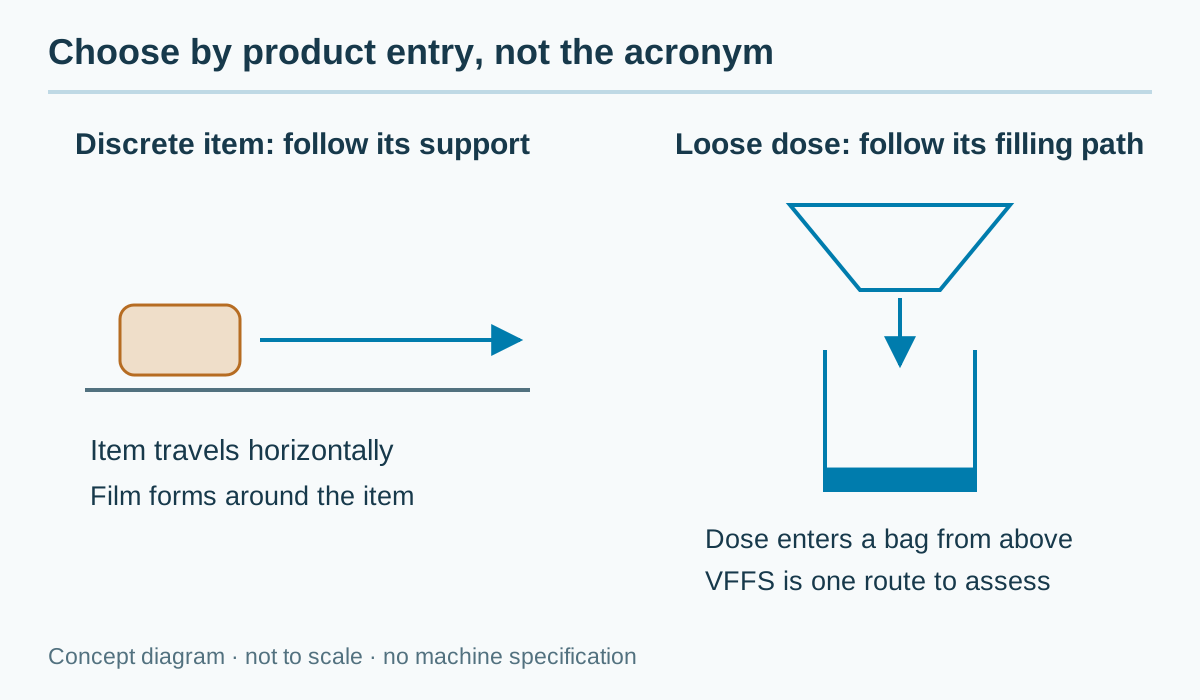
Loose products can prompt a comparison between horizontal pouching and vertical bagging. Settle the desired pack structure, filling behavior, drop sensitivity and seal requirements before choosing. A fragile item is not automatically a flow-wrapper application, and a granular product is not automatically limited to one bagging route. The HFFS versus VFFS guide helps organize that process comparison.
Pillow-Pack Format Is Not a Unique Machine Type
Pillow describes a pack shape, so the phrase pillow-pack machine leaves an important question unanswered. A pillow-shaped bag may come from a horizontal flow-wrapping process or a vertical bagging process. Show how the contents enter, where the seams sit and whether the packaging material begins as a reel or an existing bag.
The same caution applies to horizontal packaging machine: a horizontal product path does not make shrink wrapping, stretch wrapping or folding a sheet around a product equivalent to flow wrapping. If the required finish involves a shrink tunnel, folded foil or a tied bag, state that process explicitly. Use the pillow-pack terminology guide or flow wrap versus shrink wrap comparison when clarifying a reference pack.
Equipment Route Decision Table
Use the finished pack and product presentation to frame an assessment. These routes are questions to resolve, not a list of confirmed LINEVO supply categories.
| What the product and pack require | Route to assess | What to send |
|---|---|---|
| A supported solid item inside a three-seal film tube | Horizontal flow wrapping | Product dimensions, pack views, film and infeed video |
| A controlled group or tray enclosed by a film tube | Flow wrapping with suitable group support | Whole-group dimensions and transfer behavior |
| A pouch formed from reel-fed material and filled through an opening | Horizontal pouch form-fill-seal | Pouch drawing, material, dose and product behavior |
| An already formed pouch to be opened, filled and sealed | Premade-pouch filling and sealing | Empty pouch samples and filling requirements |
| A loose dose entering a vertically formed bag | Vertical form-fill-seal | Bag format, dose and sensitivity to handling or drop |
| Shrink, stretch, folded foil or another wrapping finish | A separate process review | Every face of the pack and the required closure |
If the route is still unclear, photograph an unopened pack and an opened one. Show the seams, gusset and closure, and explain what the customer must be able to do after opening. A product name alone is often less useful than these details.
Request a Process Review
Discuss your pack format on WhatsApp. Send the pack views, product photo, size range or dose, film information if known, and how the product arrives at packaging. Ask whether the requirement belongs to flow wrapping, reel-fed pouching, premade-pouch filling or another process.
LINEVO operates this site and reviews enquiries. A non-flow-wrap requirement needs its process and actual supply scope checked by the team before equipment is proposed. This guide does not establish availability of horizontal pouch machines or direct you to an assumed alternative supplier.
Common Questions
Does HFFS always mean a flow wrapper?
No. Manufacturers also use HFFS for horizontal pouch form-fill-seal equipment. Confirm the finished pack and how the product enters before comparing proposals.
Is a horizontal pouch machine the same as a premade-pouch machine?
A reel-fed pouch form-fill-seal system forms the pouch on the machine. A premade-pouch filling machine starts with an already formed pouch. Ask which input the proposal requires.
Can a pillow-shaped bag identify the right machine?
No. Pack shape alone does not identify the filling or wrapping path. Provide seam views, product presentation and the material supply format.
Sources and Scope
ULMA supports the three-seal flow-wrap definition; Volpak and Bartelt support the distinct horizontal pouching category; PFM explains a typical vertical bagging path. Their equipment features are not LINEVO specifications. All figures are process schematics, not test records or installed machines.
In this section

HFFS vs VFFS: Product and Package Selection
Compare HFFS vs VFFS across horizontal flow wrapping, rollstock pouch HFFS, and vertical bagging: drop-impact energy, ASTM F1921 hot-tack, and 3-year TCO.
Read more