
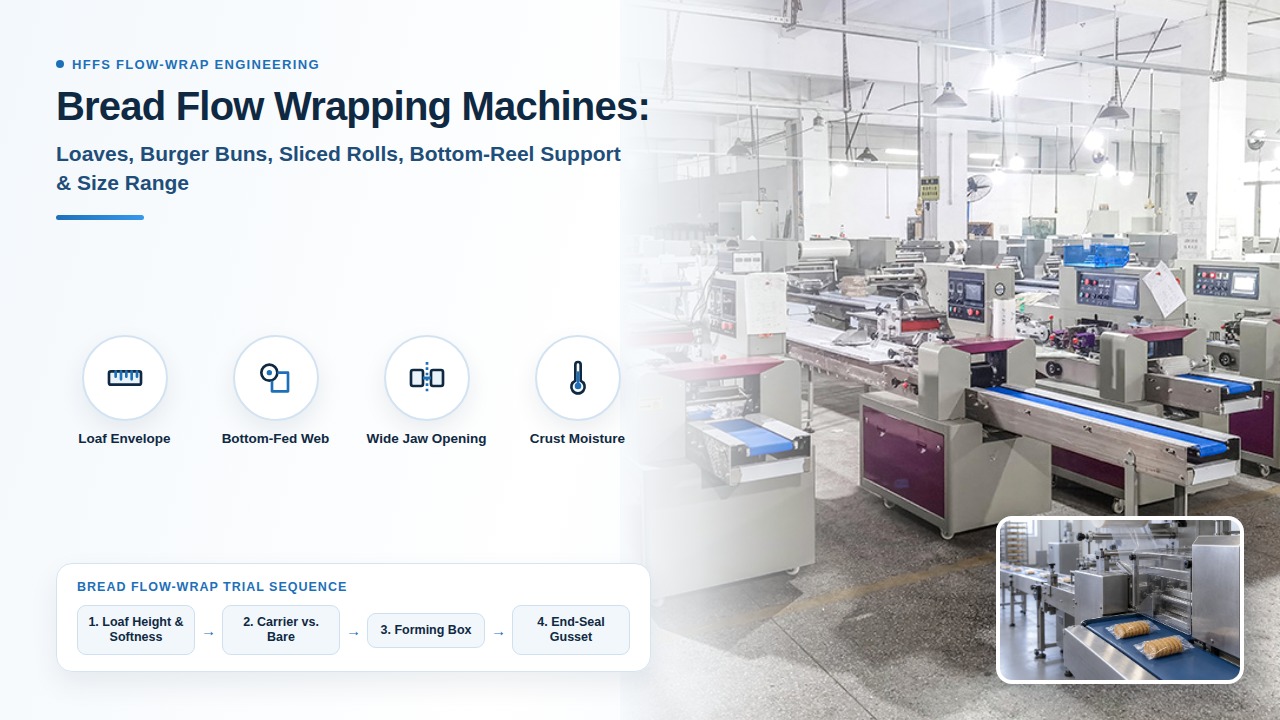
Bread Product and Pack-Format Fit
A bread packaging machine should be assessed for horizontal flow wrapping when a loaf, roll or defined group can travel on an infeed and the required package is a sealed film wrap. Start with the bread as it reaches packing: its shape, softness, surface condition and support needs determine what to test. A product name alone does not establish machine fit.
This page covers bread and similar baked loaves or rolls that can sit on an infeed. ULMA's bread application library includes flow-wrapped loaves and baguettes; its bakery technical page also shows flow-wrapped rolls. These establish examples of the process, not a confirmed supply range here. For other baked products, use the bakery product selector.
Define whether the retail unit is one loaf, one roll or several rolls together. If a tray or support card is required, show it in the product photographs and include it in the measurements. A wrapper handling a prepared group does not necessarily form that group.
Flow Wrap or Bagging?
Choose the opening and closure before comparing machines. Conventional flow wrapping forms reel film around the bread, makes a longitudinal seal and seals and cuts the ends. A bag gathered at the neck and closed with a clip or tie needs a different packaging operation. A buyer who needs that closure should specify it directly.
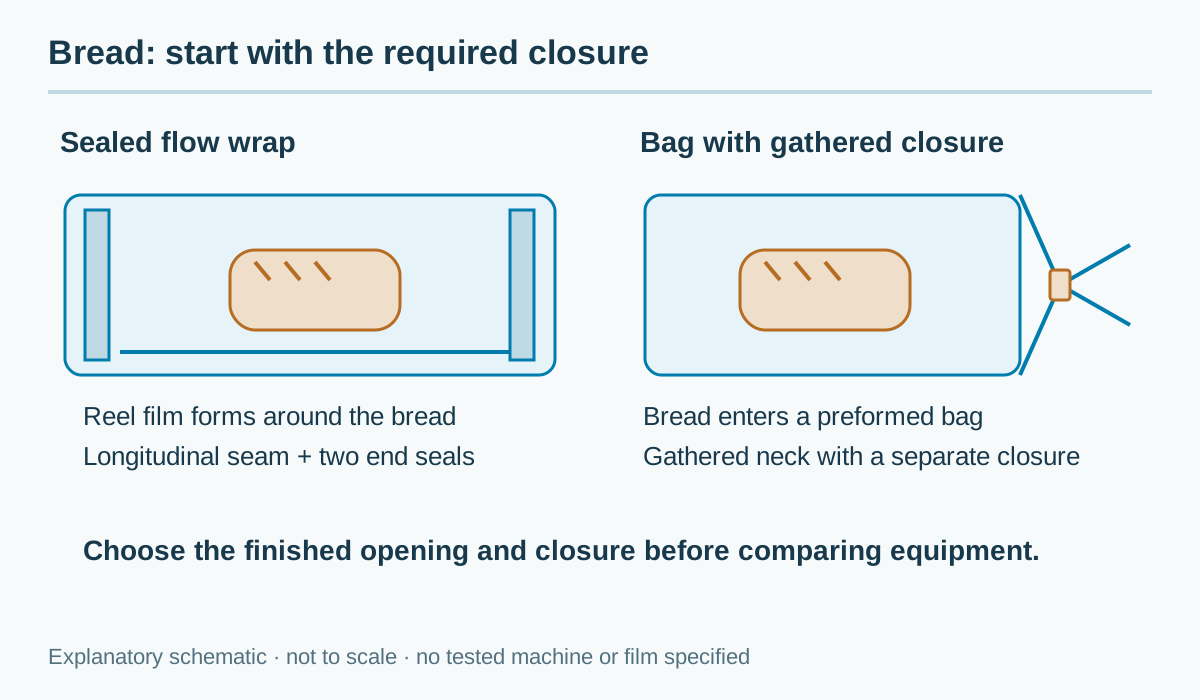
| Required result | Decision to make | What to send |
|---|---|---|
| A sealed wrap around one loaf or roll | Assess horizontal flow wrapping | Product sample and an example of the desired sealed package |
| A sealed wrap around grouped rolls | Define grouping and support before the wrapper | Group count, arrangement and any tray |
| A bag with a clip, tie or gathered neck | Review a bagging and closure route separately | Existing bag and closure sample |
| A package intended to reclose | Specify the reclosure feature separately | Opening method and a reference package |
A sealed appearance does not establish shelf life. State the required storage and distribution conditions and agree how the finished bread and package will be evaluated. Do not infer a shelf-life result from the choice of wrapper or film alone.
Dimensions, Cooling and Product Handling
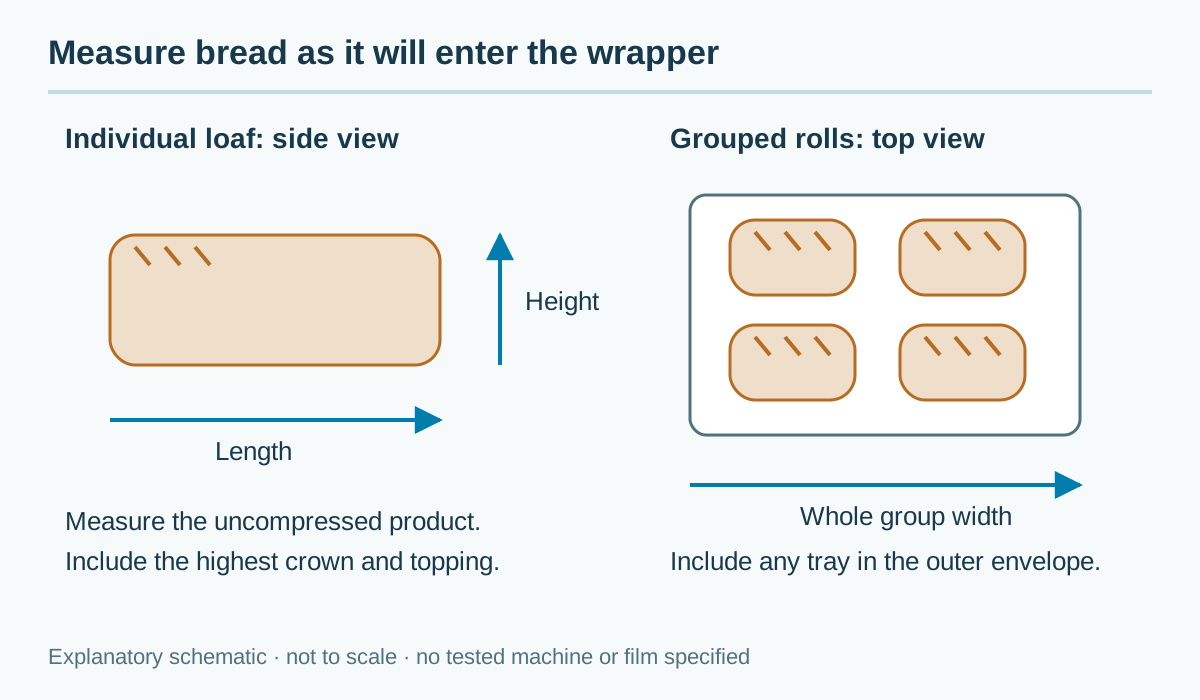
Measure actual size extremes after the bread reaches its intended packing condition. Record length, width, highest crown and any protruding topping. For grouped rolls, measure the complete group and tray rather than multiplying a single roll's nominal width. Record which dimensions occur together in a real product.
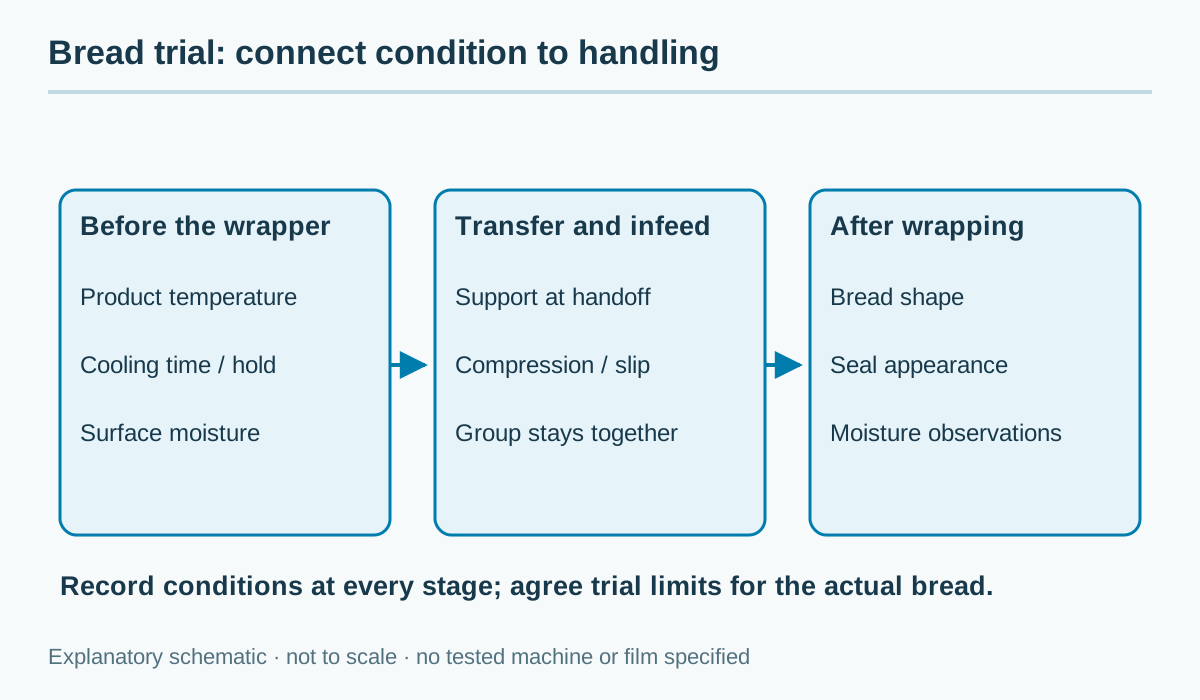
Tell the supplier the bread temperature at packing, time since baking, cooling arrangement and any visible surface moisture. There is no universal cooling time or packing temperature offered here. Include a representative sample from the condition the line actually encounters, and flag any variation during startup or production holds.
Show the handoff from the previous conveyor. Ask how the bread is supported across the transfer, whether a pusher contacts it, and how placement affects the crown or sides. Agree what counts as unacceptable compression, tearing, loose topping or misalignment before a trial. Operators should assess handling through the supplier's guarded demonstration and approved procedure.
Film and Feeding Choices
Send the current film specification or reel identification, a finished pack sample and the required opening behavior. Discuss seal compatibility and the product's storage requirements with the film supplier. Syntegon's sealing guidance identifies product, film and sealing conditions as linked inputs; temperature, pressure and contact time need consideration together.
For soft bread or loose roll groups, ask the supplier to explain the product support through the former and the proposed film path. An inverted arrangement may enter that discussion, but it is not a blanket solution for soft products. Use the flow wrapper configuration guide to compare top-film and bottom-film arrangements against the same sample.
Define feeding responsibility explicitly. Manual placement, automatic spacing and forming roll groups are separate tasks. Describe the incoming arrangement and what happens when bread stops arriving or the wrapper pauses. Include crumb and topping accumulation, cleaning access and the site's cleaning requirements in the scope discussion.
Machine Fit and Changeovers
Ask for a format-by-format assessment covering the smallest and largest actual bread products, group arrangements and support materials. Have the proposal identify former changes, guide adjustments, film changes and any other format parts. Nominal film width does not confirm clearance for every loaf below that width.
Keep a trial record for each assessed combination: bread condition, film identity, machine configuration, observations and acceptance method. Check bread shape after opening as well as package appearance. Mark formats that have not been run as untested; a trial on one roll does not verify a different loaf or multipack.
Send Your Bread Sample Requirements
Discuss your bread package on WhatsApp. Send photos of the bread and desired package, actual size extremes, packing temperature and cooling notes, pieces per pack, film details and a short infeed video. Ask which handling and sealing arrangement should be assessed and which samples are needed next. The requirements checklist helps keep those inputs together.
Can a bread flow wrapper make a bag with a twist tie?
Conventional flow wrapping seals reel film around the bread. A gathered bag with a twist tie or clip is a separate bagging and closure requirement. Send a sample of the required package before equipment selection.
Can soft rolls be flow-wrapped without a tray?
That needs assessment with the actual rolls and group arrangement. Ask for a trial of transfer support, product contact and finished-pack handling before agreeing whether a tray is necessary.
What temperature should bread be when it is wrapped?
No universal temperature is specified here. Record the condition at your intended packing point and agree product, moisture and package checks with the relevant suppliers.
Before you request a quote
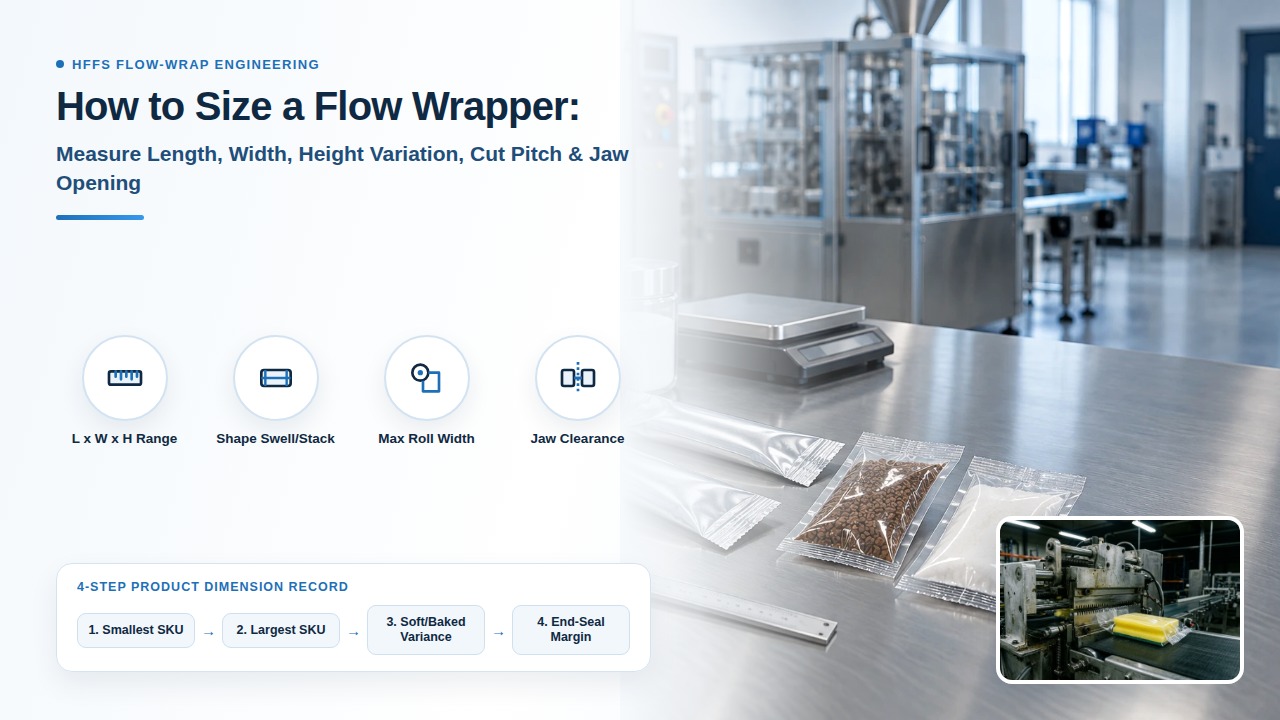
How to Size a Flow Wrapper for Your Product
Size a horizontal flow wrapper from real product length, width, and height tolerances: flat web width (W_web), cut pitch (L_cut), forming box, and jaw clearance.
Read more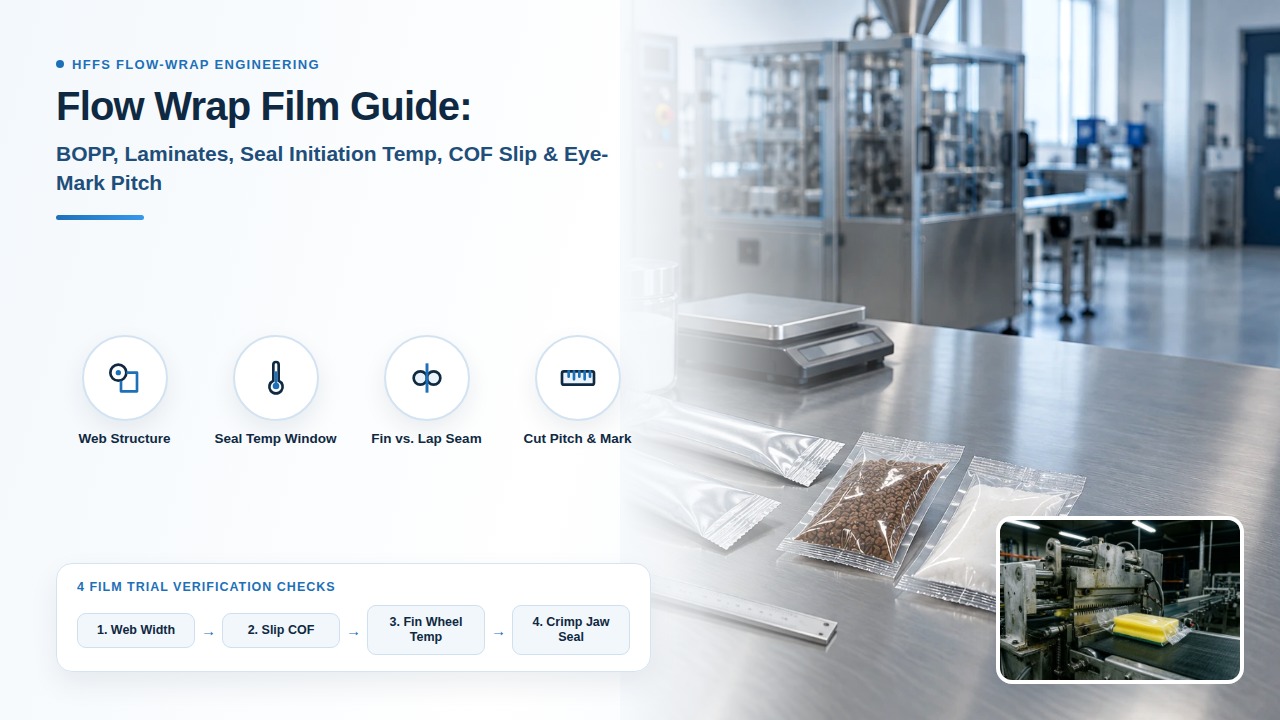
Choosing Flow Wrap Film for Your Product and Machine
Choosing flow wrap film starts with the product and required seal. Gather the film specification, reel dimensions and samples for compatibility testing.
Read more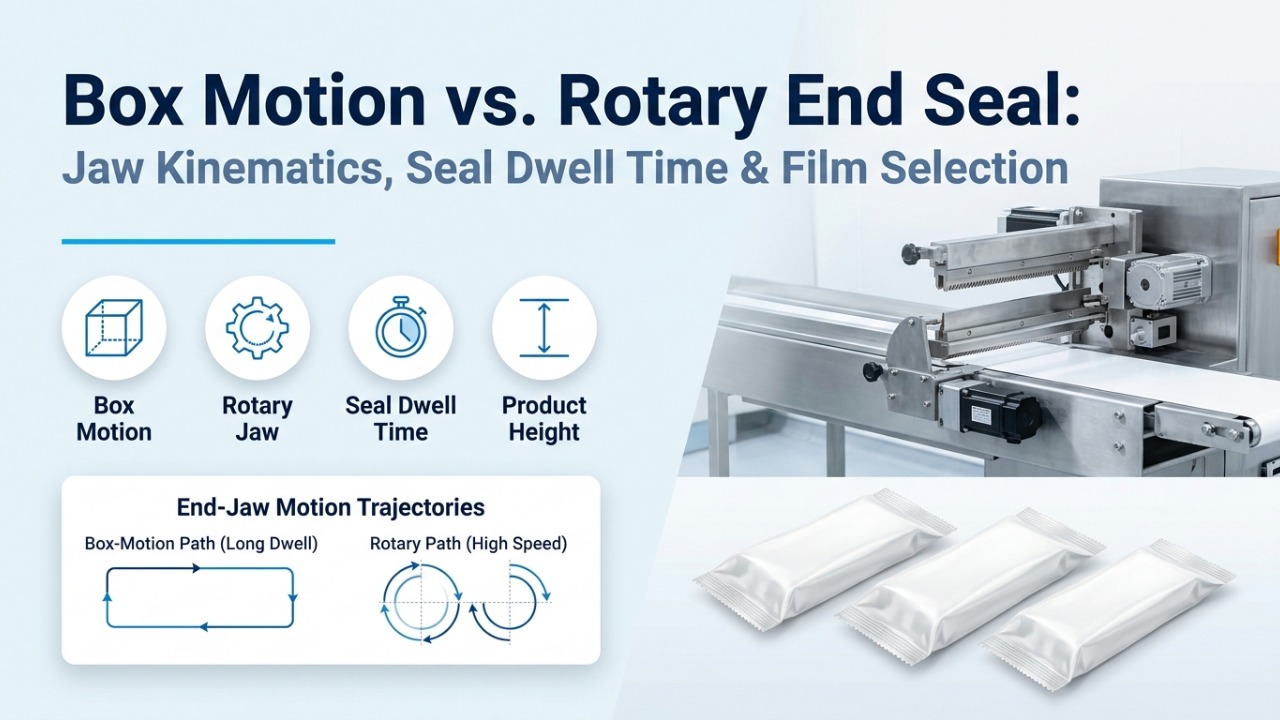
Compare Flow Wrapper Types and Configurations
Rotary or box motion? Top film or bottom film? Compare the feeding, film path and end-seal choices in a flow wrapper proposal.
Read more