
How should you assess flow wrap residual oxygen?
Flow-pack machines replace air inside the film tube by continuous flushing before sealing. Test the finished packages for gas composition and leaks after packaging. For a bakery project, organize the assessment around the lance arrangement, product, film barrier and cross-seals. Use the checks below to prepare your gas-flush trial and discuss the configuration through our bakery packaging machine guide.
Gas lance geometry: start with the arrangement
In the documented deoxygenating lance arrangement, the lance extends into the film tube above the product. In that arrangement, injected gas forces air out in the direction opposite the injection.
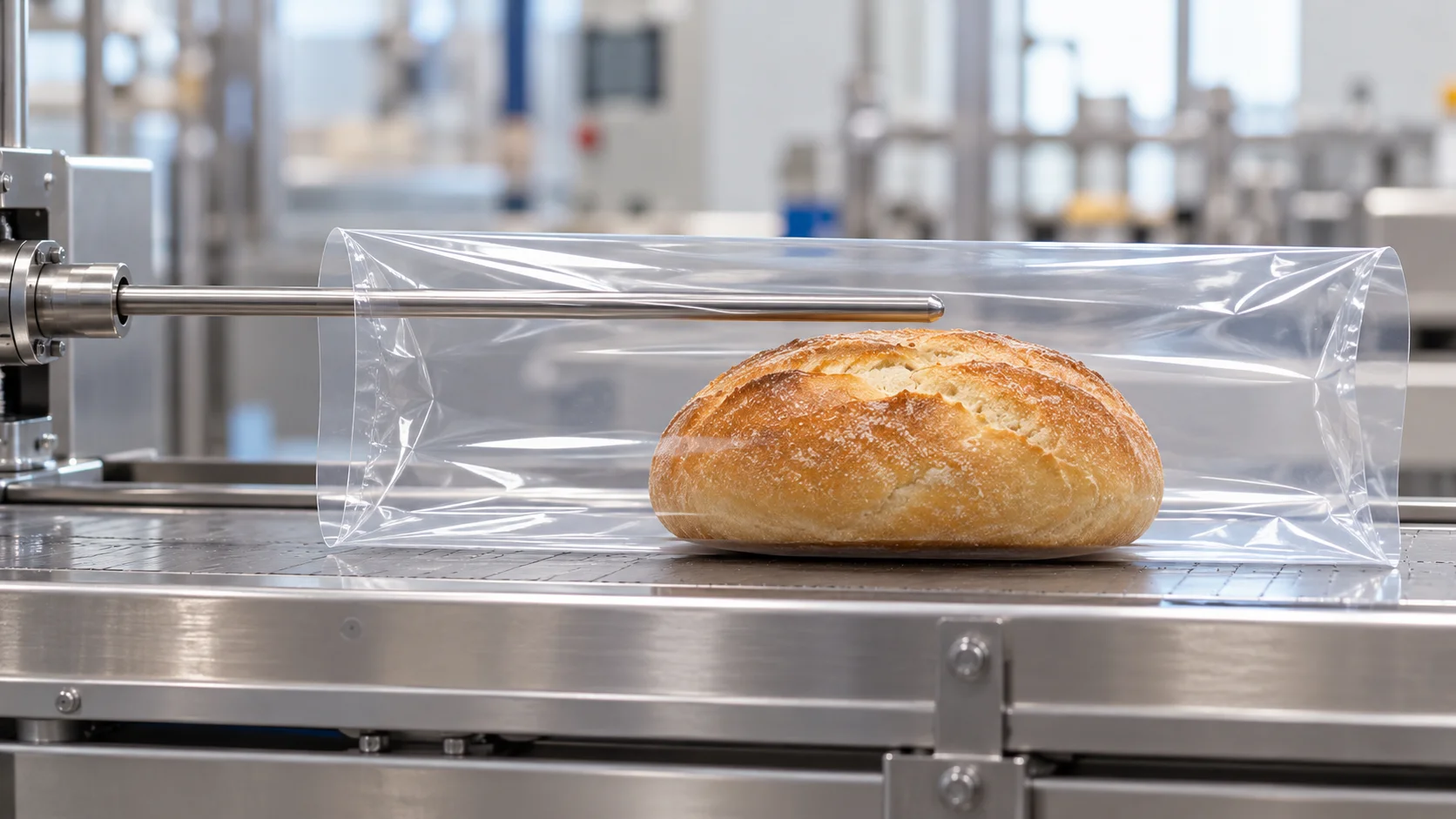
Ask for an annotated view of the proposed lance inside the film tube. Mark the product envelope, outlet position and seal locations. Include the insertion setting in the trial record alongside the chosen gas and running speed. Compare proposed arrangements using your product and pack layout.
Nitrogen is used to displace air, especially atmospheric oxygen, in food packaging.
Bakery products and the gas choice
Bakery products can retain large quantities of air inside their porous structure. A laboratory study simulated gas-flushing modified atmosphere packaging and measured oxygen directly inside bread rolls. Gas properties affected the oxygen-substitution rate in those bread rolls. Baking time also had measurable effects on the oxygen-substitution rate in the study.
For your trial brief, identify the bakery product and its baking process. Include the product's porous structure in the discussion, and keep the tested product description with the gas readings.
For bread and cake, nitrogen is used as a supporting gas to counter package collapse caused by carbon dioxide absorption. For iced bakery products, excess carbon dioxide can damage icing appearance by dissolving into fat.
What residual-oxygen target should you specify?
Linde describes residual oxygen of less than 1% for its carbon-dioxide MAP approach to controlling mold in baked goods. When preparing your own acceptance brief, write down the chosen gas mixture, product, residual-oxygen target and sampling point together. Ask for the target to be checked on finished packs at the agreed trial conditions.
Cross-seal leak prevention: check the jaws and material
The protective gas must remain inside a leak-tight package for the modified atmosphere to perform. Seal contamination and defective material are possible causes of leaks. Faulty temperature or pressure distribution can also cause leaks.
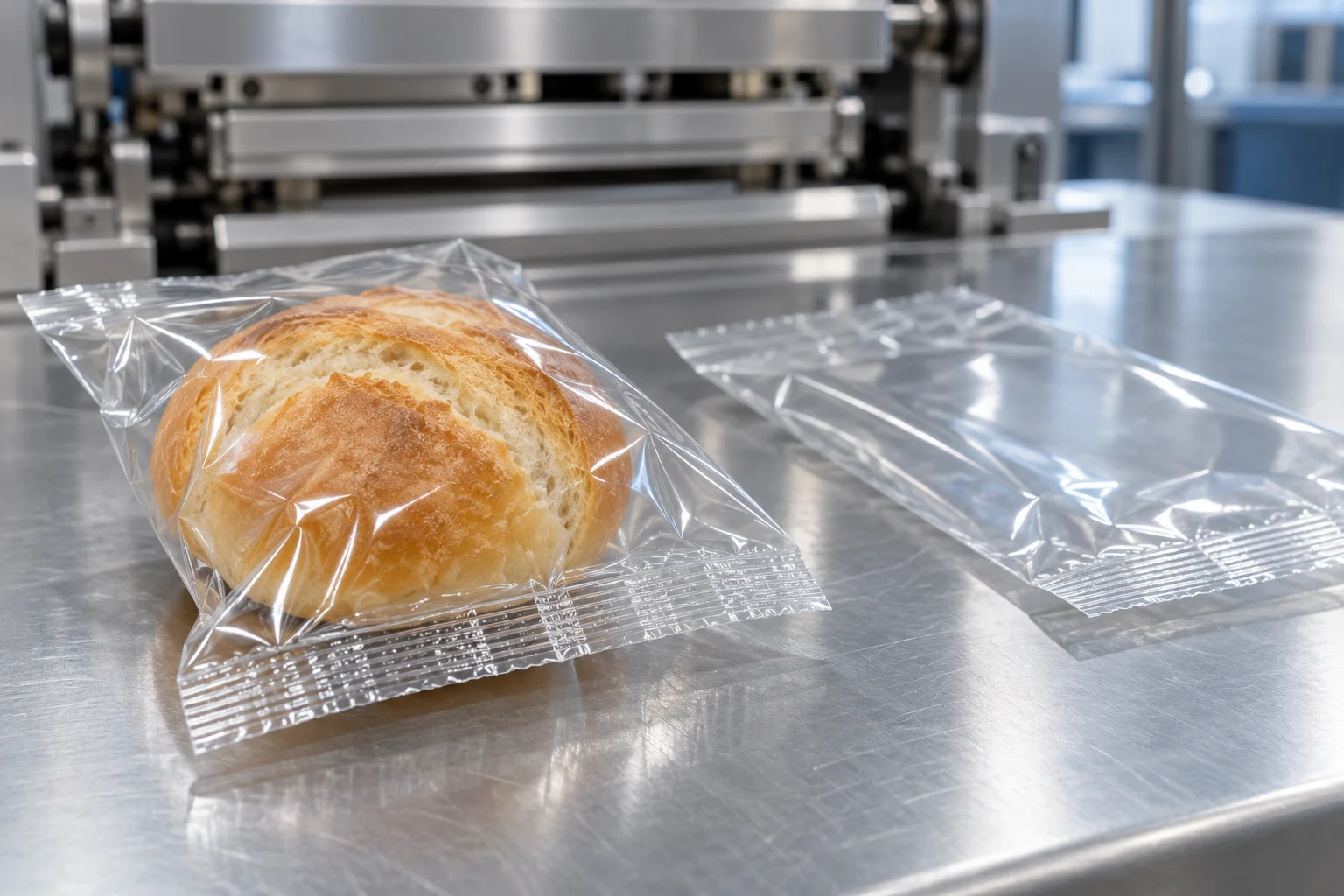
Clean and check jaw contact
Stiff, coarse-bristled brushes can damage sealing-jaw serrations and cause sealing problems. After cleaning the jaws, run a carbon impression to check the setup before resuming production.
Check temperature across the sealing face
Sealing jaws are often hotter in the middle than at the ends. The controller usually indicates temperature at only one point within the jaw. Use a pyrometer to check multiple points across the sealing face against the film seal range.
Investigate a leading-end pattern
Leaks confined to the leading end seal may indicate a cutting issue. Crimper bounce can prevent adequate pressure and heat transfer to the leading seal. Product buildup inside the knife slot can create a sponge-like effect on the knife.
Keep the leading and trailing end-seal findings separate in the inspection record. Mark the observed leak location on a retained pack or photograph before changing the setup.
Film barrier: assess the finished package
Finished-package seals, seams and closures contribute to overall transmission rates. AMETEK MOCON recommends testing complete packages for their actual transmission rate. Transmission-rate testing should typically use the package storage conditions. Film orientation matters when a coating is applied or the test gas is humidified.
Request the film specification and the finished-package test report together. Record the material orientation and test conditions with the result. For the broader material discussion, see flow wrap film selection.
Measure gas composition and locate leaks
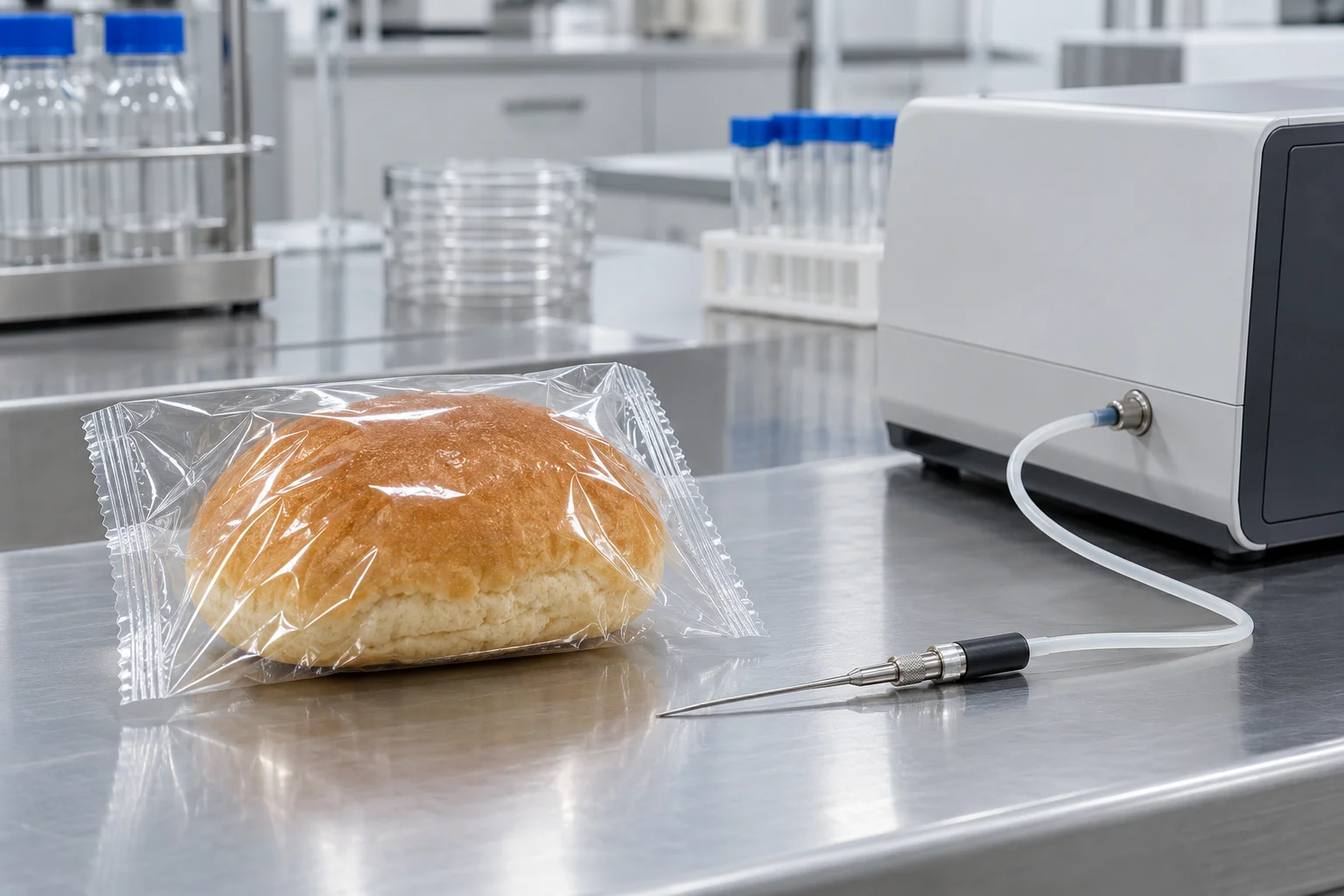
Gas monitoring can use continuous analysis during packaging or batch sampling after packaging. Inline gas analysis continuously monitors the composition of the modified atmosphere. A needle is used to take a gas sample from the package.
In the water-bath leak test, escaping air or filling gas forms a visible stream of bubbles that identifies the leak location.
Use a trial sheet with separate spaces for the gas result and the leak finding. Record the sampling time, pack identity, running conditions and test method. Keep any repeat checks tied to the same product, film and machine setup.
| Topic | Information to provide | Evidence to request |
|---|---|---|
| Product | Bakery product, dimensions, porous structure and baking process | Identification of the actual trial product |
| Pack and lance | Pack layout, headspace and proposed lance position | Annotated arrangement and recorded insertion setting |
| Gas and output | Gas mixture, gas flow, target pack speed and residual-oxygen target | Finished-pack gas results with sampling time |
| Film barrier | Film specification, orientation and intended storage conditions | Finished-package transmission report |
| Seals | Observed leak location and current sealing setup | Gas-composition and leak-test findings |
Prepare your bakery gas-flush enquiry
Send your target residual oxygen, pack headspace, product porosity information, gas flow and target pack speed. Attach the proposed film specification and any current package test results to your message. Include a sketch or photograph of the lance arrangement for an existing line.
Discuss your bakery gas-flush configurationSources
- WITT — Modified Atmosphere Packaging white paper
- Method and apparatus for deoxygenating food packages — documented flow-wrap lance arrangement
- Piergiovanni and Fava — Minimizing the residual oxygen in modified atmosphere packaging of bakery products
- Linde — Modified atmosphere packaging for baked goods
- Greener Corporation — Preventative Maintenance Quick Tips
- Greener Corporation — When Cutting Issues Cause End Seal Leakers
- AMETEK MOCON — Permeation Laboratory FAQs
- WITT — Package leak detection
Related guides
Choosing Flow Wrap Film for Your Product and Machine
Choosing flow wrap film starts with the product and required seal. Gather the film specification, reel dimensions and samples for compatibility testing.