
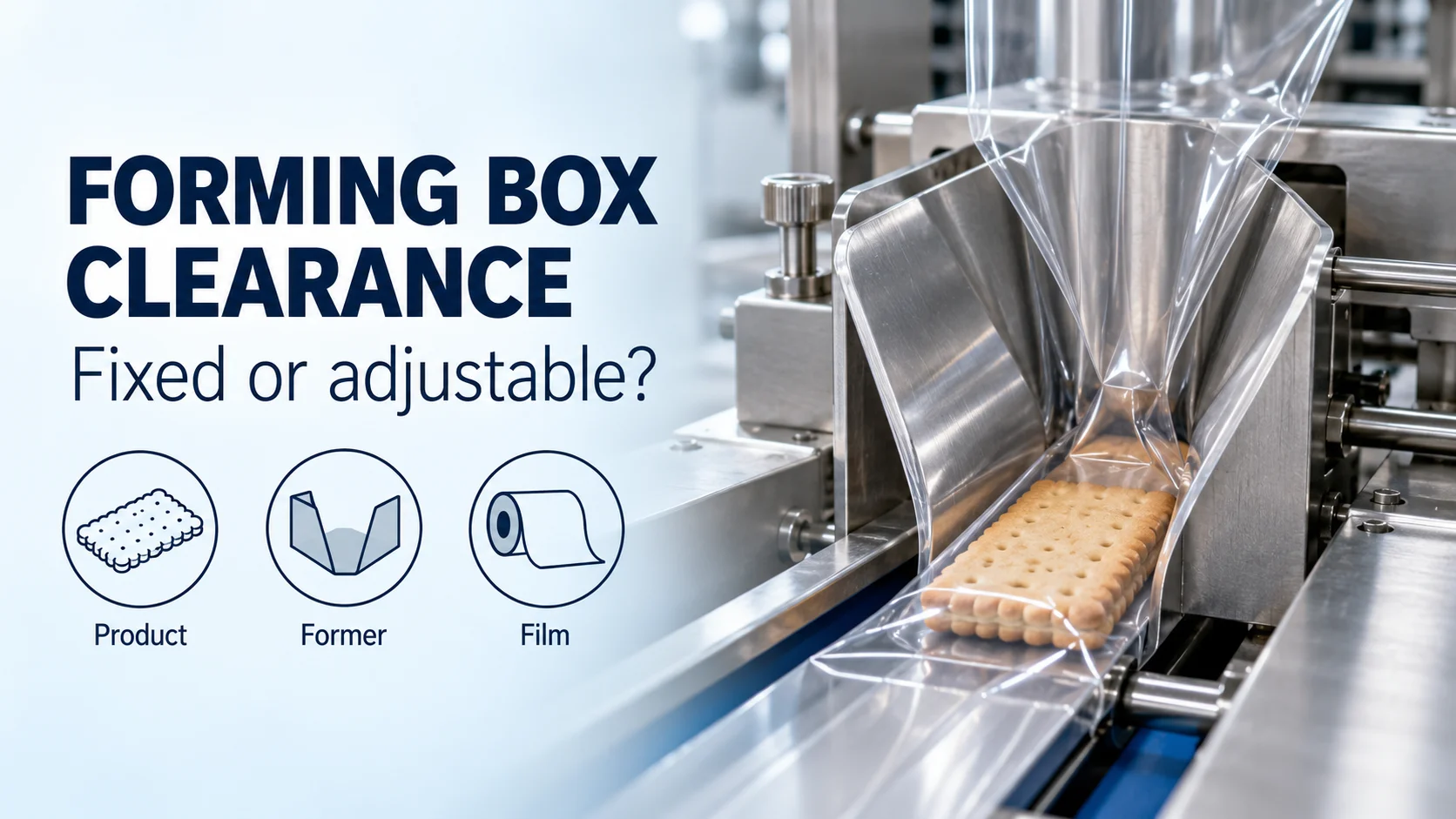
How should you choose a forming box?
For flow wrapper forming box clearance, start with the product and intended pack. Fixed forming boxes are designed for a specific product size and film width. Adjustable forming boxes allow height and width changes for different product formats.
Use this guide to compare the former opening, product height and folding-shoulder geometry. For the wider process decision, start with our flow wrap packaging guide.
| Review item | What to put in the brief |
|---|---|
| Product | Record length, width, height and shape. |
| Fixed former | Match the specified product size and film width. |
| Adjustable former | Check the proposed height and width settings. |
| Pack | Specify bag width, height and clearance requirements. |
| Validation | Prepare physical product and packaging-material samples. |
Product height: prepare the full envelope
Product shape, packaging material, machine setup and pack dimensions influence forming-shoulder design. Former design requires product length, width, height and shape.
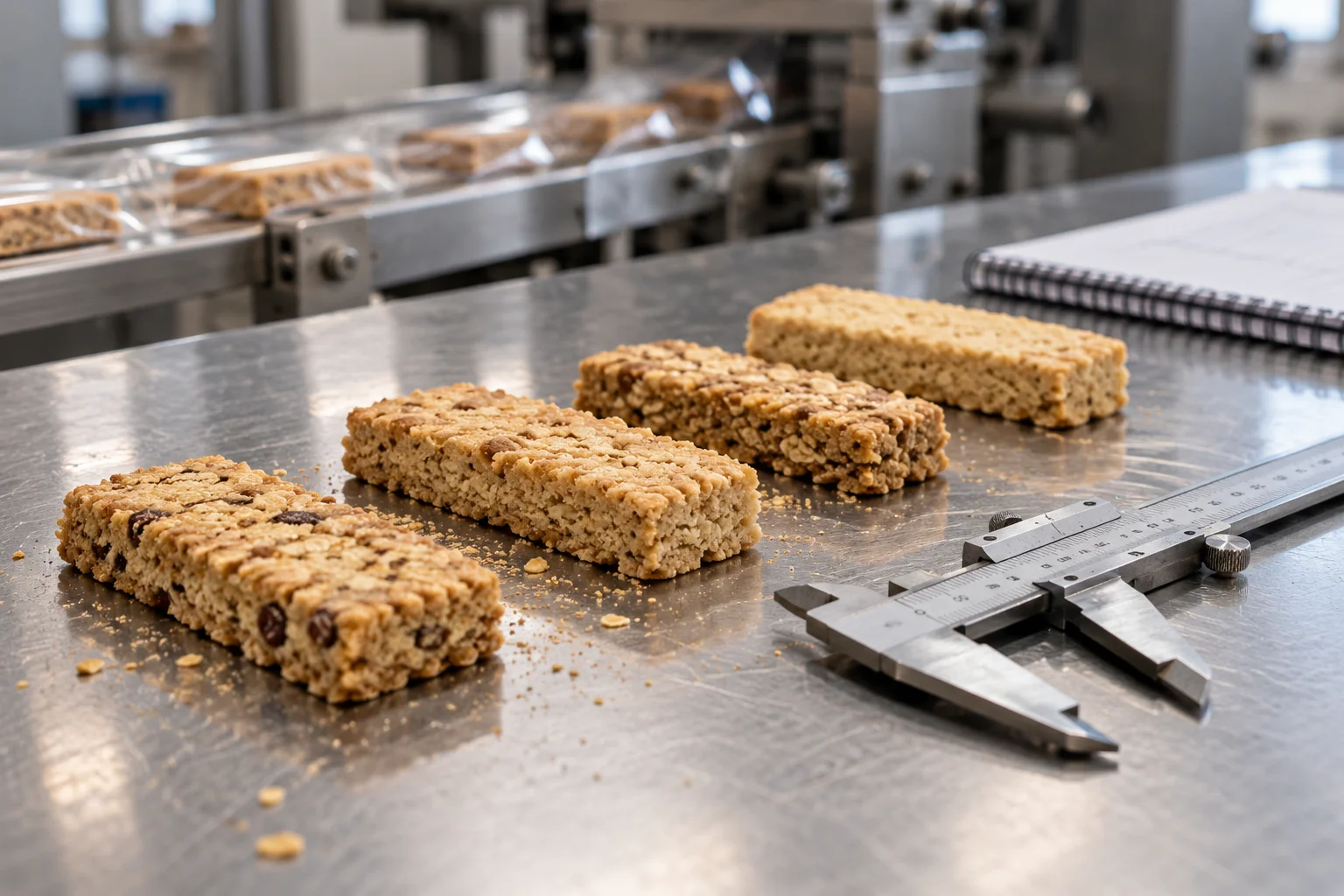
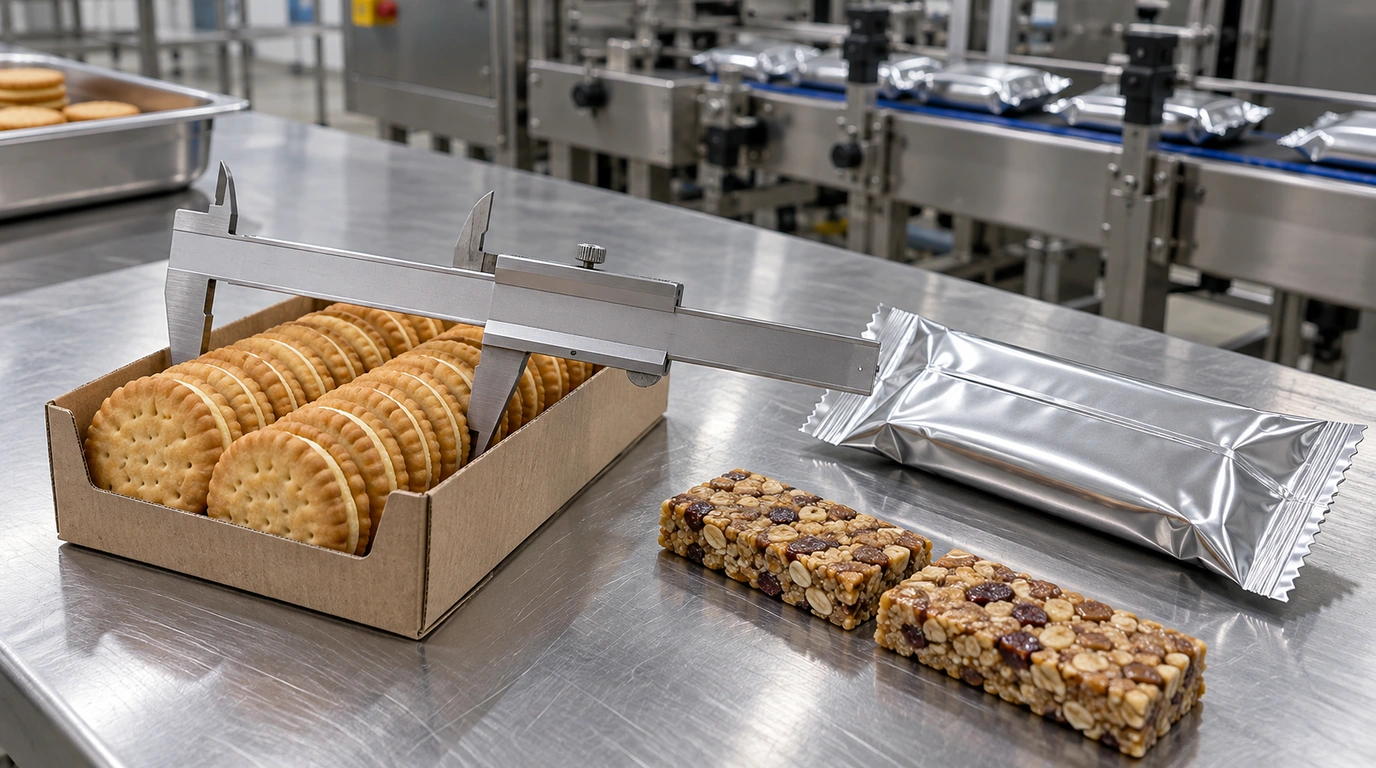
Lay out the intended product formats together. Record their dimensions separately, including the tallest samples you want assessed. Keep the packing orientation with each record, and attach photographs of the product profile.
Oversized extruded snack bars commonly cause product-feed jams and seal-integrity faults; tightening upstream portioning consistency and sizing the forming box to the tallest bar in the batch resolves them.
When investigating intermittent feed trouble, compare retained samples from the affected run with the product dimensions in the setup brief. Record the product condition alongside the former setting rather than changing the setting without a record.
Clearance: keep the setting tied to the former
On our horizontal flow wrappers, we design a standard 3–10 mm clearance between the product envelope and the forming-box opening so products enter the film tube smoothly without dragging on the folding wings.
Our forming-box engineering drawing for each format marks the product envelope, the former opening, and both lateral and overhead clearance allowances, which we verify on your physical product samples during factory acceptance testing.
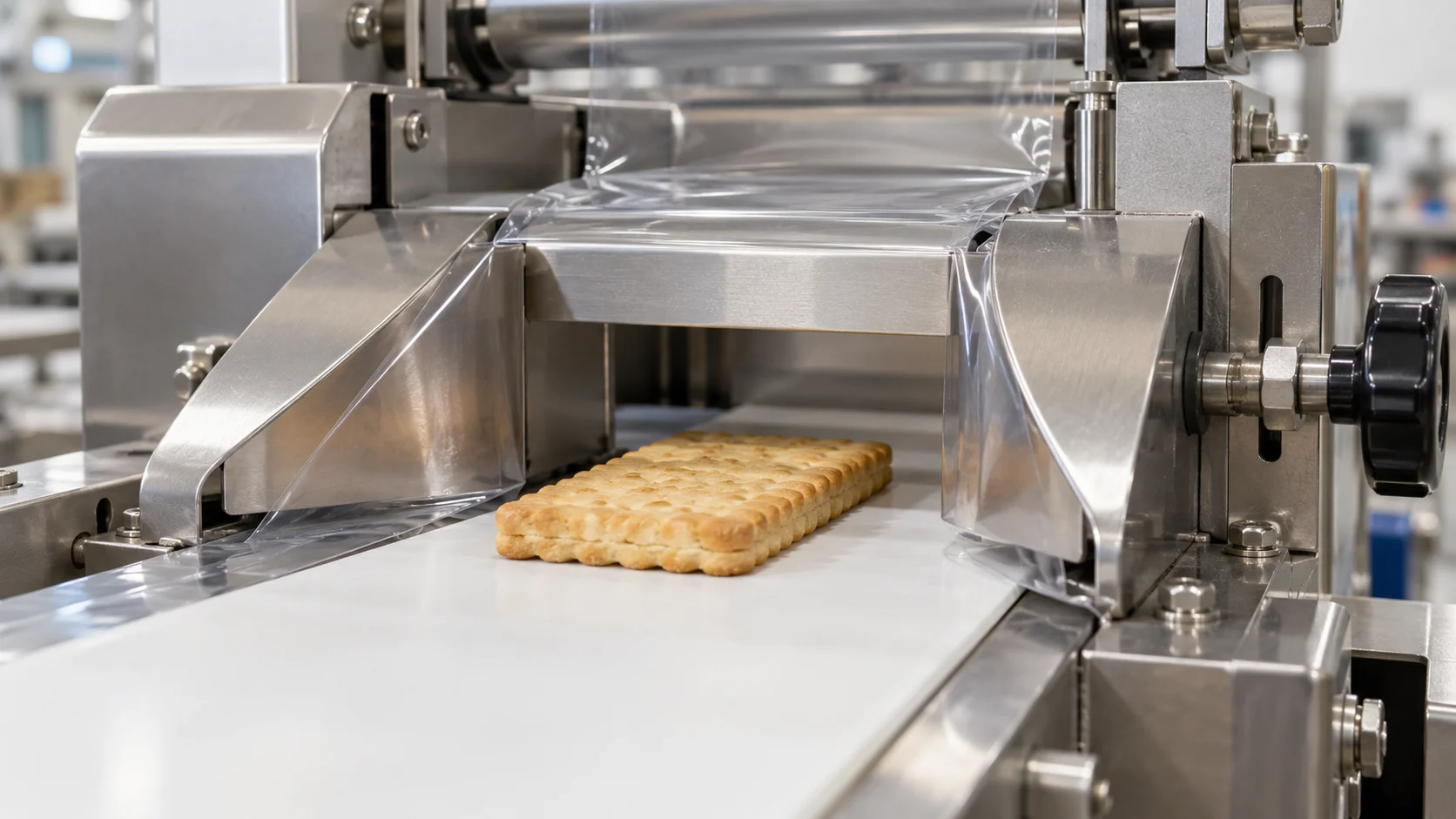
The forming box should be level, centered and aligned with the product feed. Centering product rails with the material on the centerline guides product into the forming box.
Include the former drawing and the machine product-height specification as separate items in your comparison. Ask for the proposed setup for each product format, with the adjustment positions recorded.
Fixed or adjustable: compare fit and adjustment
Tell us whether your line runs a single dedicated SKU or multiple product sizes, and we will supply either a dedicated fixed forming box for maximum film-tracking stability or an adjustable forming box with documented height and width settings for each format in your range.
Insufficient adjustment range in a standard adjustable former is a reason to specify a dedicated or custom forming shoulder. Scratch-sensitive metallized or coated packaging film and non-standard pack aspect ratios also benefit from a custom-contoured forming shoe.
We test your physical product samples and film roll through the forming box before shipment and record the calibrated scale settings for each format in your machine manual.
Folding-shoulder geometry and film entry
Optimal forming tension depends on product, forming-box design and packaging-material structure. Increasing tension will not solve forming geometry that mismatches the product, material or pack dimensions.
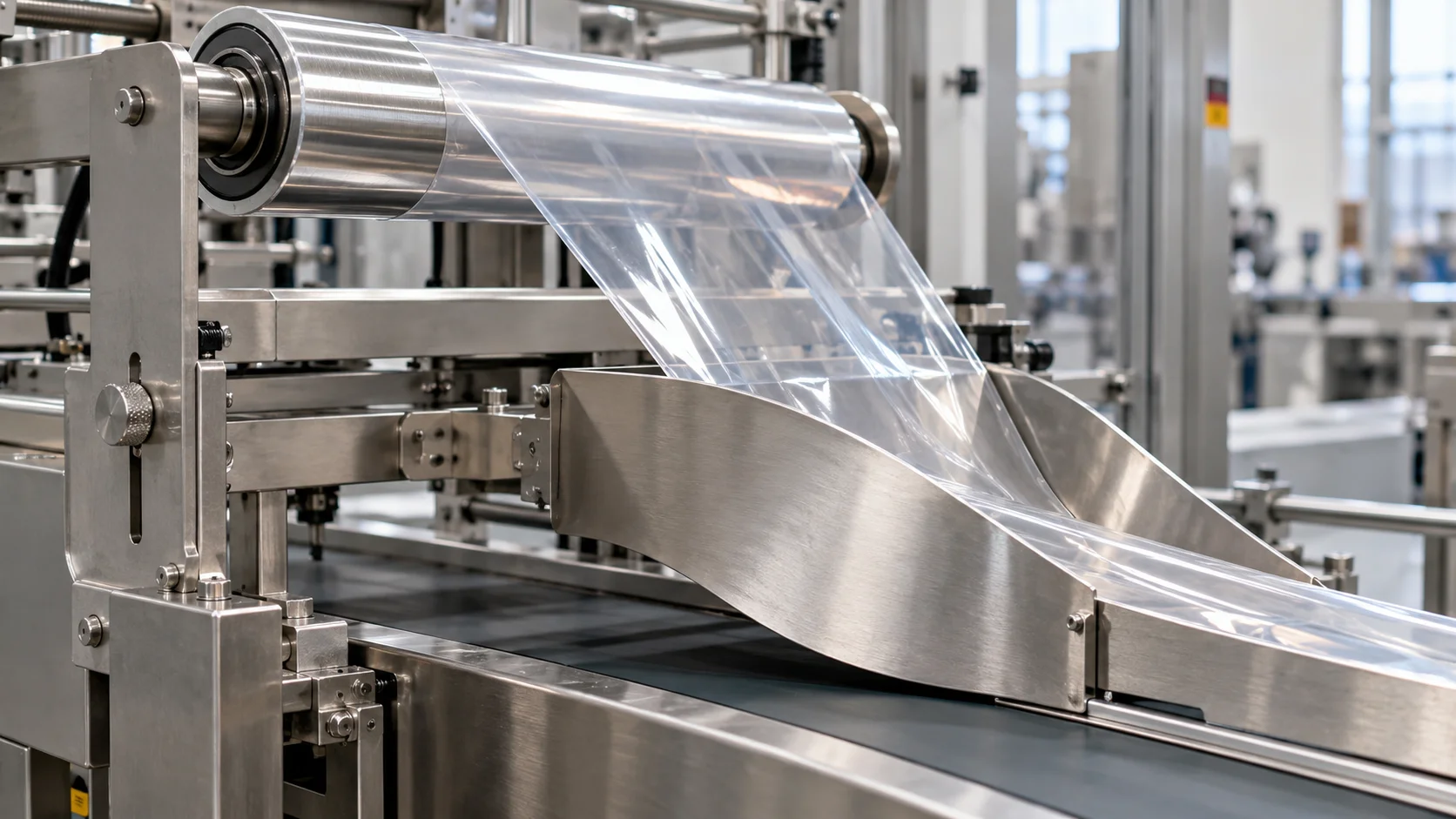
The final dance roller controls the material entry angle into the forming box. A material change may alter forming performance through thickness, stiffness or other characteristics.
Keep the material specification with the former setup record. When comparing films, record which material was threaded through the tooling and retain a sample of the resulting pack. Use the flow wrap film guide for the broader material discussion.
What should you inspect on the formed pack?
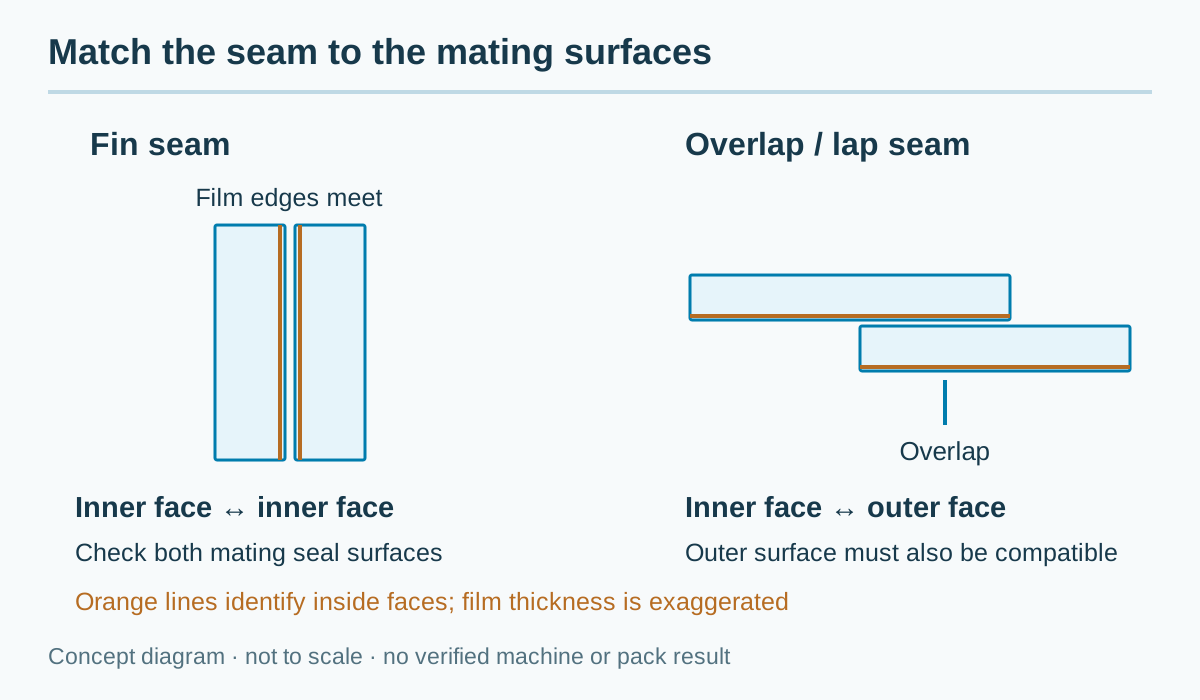
Score marks or creases can reduce packaging material barrier properties. Inadequately performing formers can tear or break packaging material. Poorly performing formers can cause uneven fin seals.
Inspect the formed material for scoring, tearing and fin-seal alignment. Photograph the affected area and keep the product, material and setup record together for the next comparison.
Check the pusher transition as well as the opening
Pusher path, product position and forming geometry must be considered together. The infeed pusher lug must clear the forming shoulder and bottom entry plate cleanly throughout the transfer stroke.
During factory setup, we verify the complete product transfer from the lug chain or belt into the forming shoulder and mark the calibrated pusher phase and former position in your setup sheet.
Production-speed setup still requires correct material tension, shoulder alignment and machine settings.
Prepare your former-selection brief
Former design requires packaging-material type, thickness and width, along with your target bag width, product height, and clearance requirements. Send us physical product samples and a test roll of your packaging film so our tooling engineers can validate forming-shoulder entry and fin-seal alignment during factory trials.
Send your product-dimension records, intended pack dimensions, material specification and line speed target. Include photographs of any existing pack defects you want to resolve. Use the flow wrapper requirements checklist to organize the wider project.
Discuss your product and former requirementsSources
- FlowWrapper — Horizontal Flow Wrapper Forming Box & Tooling Engineering Guide
- FlowWrapper — Flow Wrap Packaging Overview & Film Selection Guide
- FormerFab — Flowpack Forming Shoulder Geometry Reference
Related guides
Choosing Flow Wrap Film for Your Product and Machine
Choosing flow wrap film starts with the product and required seal. Gather the film specification, reel dimensions and samples for compatibility testing.
Flow Wrapper Requirements Checklist
Prepare the product, pack, film, accepted-output, line-interface and site inputs for a flow wrapper configuration, sample trial and acceptance plan.